
.png)
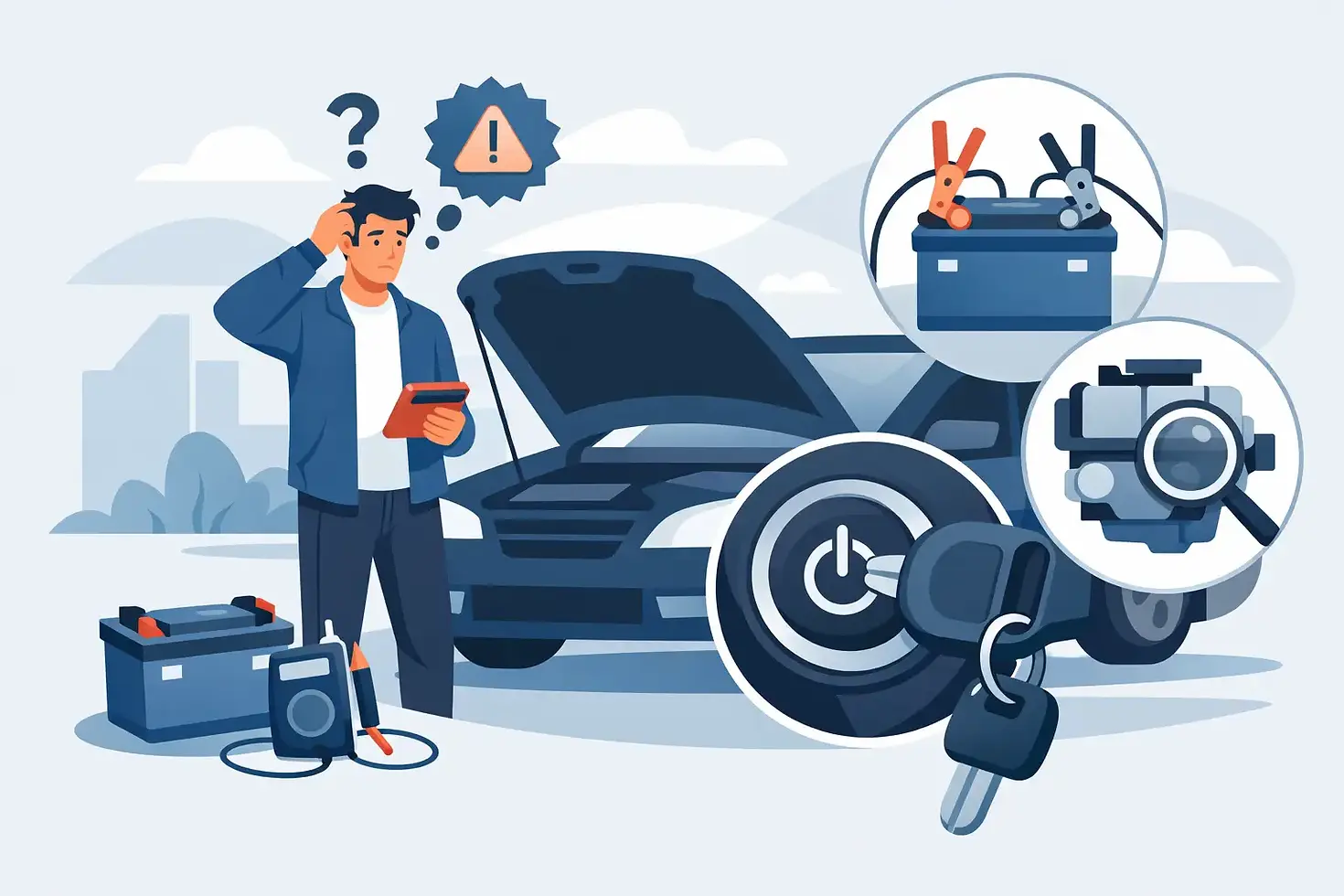
Car Won’t Start Diagnosis: What to Check First
- niksautorepair99
- Apr 1
- 6 min read

You turn the key or press the start button, and instead of heading to work, school, or your next job site, you get silence, a click, or an engine that just won’t catch. A proper car won’t start diagnosis starts with staying calm and narrowing down what the vehicle is actually doing, because those first clues often point to the real problem.
Some no-start issues are simple. Others can leave you stranded without much warning. The key is not guessing and not replacing parts blindly. If you know what to look for, you can tell the difference between a weak battery, a starter problem, a fuel issue, or something more serious in the ignition or engine management system.
Car won’t start diagnosis begins with the symptom
When a vehicle does not start, the exact symptom matters. “Won’t start” can mean a few different things, and each one sends the diagnosis in a different direction.
If the engine does not crank at all, the problem is often in the battery, starter, connections, ignition switch, or a safety switch. If it cranks but does not fire up, you may be dealing with fuel delivery, spark, air intake, sensor failure, or anti-theft issues. If it starts and then dies right away, the fault may be related to fuel pressure, an immobilizer system, or idle control.
This is why a mechanic will usually ask a few simple questions first. Do the dash lights come on? Do you hear a single click, repeated clicking, or nothing at all? Was the vehicle running rough before this happened? Did the problem start after a cold night, a boost, or recent repair work? Those details save time and help avoid unnecessary repairs.
What to check first before calling for service
Start with the basics, especially if you are in a driveway, parking lot, or at the roadside. Check whether the battery appears dead. Dim headlights, weak interior lights, or rapid clicking when you try to start are common signs. In Canadian weather, especially during winter, battery weakness shows up fast.
Next, make sure the vehicle is fully in Park or Neutral. It sounds obvious, but shift position causes more no-start calls than many drivers expect. If you drive a manual, confirm the clutch is fully depressed. Some vehicles will not crank unless these safety conditions are met.
Take a look at the battery terminals if they are accessible. Heavy corrosion, loose clamps, or damaged cables can interrupt power even when the battery itself still has life. If the connections are visibly loose, that alone may be the issue. If they are badly corroded, forcing repeated starts is not likely to help.
Also pay attention to the key or push-button system. A weak key fob battery can sometimes prevent the vehicle from recognizing the key. If your dash displays a key warning or security light, the starting system may be blocked even though the rest of the car seems normal.
The most common causes of a no-start condition
Battery problems are still the most common reason a vehicle will not start. That does not always mean the battery is old. A charging system problem, a parasitic draw, extreme cold, or lights left on can all leave you with a dead battery. If the battery is boosted and the vehicle dies again soon after, the issue may actually be the alternator or a power drain.
Starter motor failure is another frequent cause. A single click with no crank can point to a faulty starter, poor battery power, or a bad cable connection. Sometimes the starter fails gradually and gives warning signs, such as slow cranking or intermittent starting. Other times it stops working with little notice.
Fuel delivery issues can also stop an engine from firing. If the engine cranks normally but will not start, the fuel pump, fuel pressure, relay, or injector control may be at fault. In some cases, the vehicle may have been running fine one day and then suddenly refuse to start the next.
Ignition problems are common as well. Worn spark plugs, failed ignition coils, crankshaft position sensor issues, or other engine management faults can prevent combustion. Modern vehicles rely on several sensors to start and run properly, so one failed input can create a no-start without any obvious external signs.
Then there are anti-theft and electronic system problems. If the immobilizer does not recognize the key, the engine may crank but not start, or it may start briefly and shut off. These faults can be frustrating because they often look like mechanical problems at first.
When a car cranks but won’t start
This version of a car won’t start diagnosis is where proper testing matters most. When the engine turns over but does not run, many drivers assume the battery is fine and start guessing from there. The battery may still be weak, but the bigger issue is usually whether the engine is getting spark, fuel, and the correct sensor signals.
A technician will typically verify fuel pressure, scan for stored fault codes, and test ignition output rather than replacing parts one by one. That matters because several different failures can create the same symptom. A bad fuel pump, failed crank sensor, blown fuse, faulty relay, or security issue can all result in an engine that cranks strongly and never starts.
Weather can play a role too. In colder parts of Canada, fuel quality, battery condition, and thicker oil can all contribute to hard starts. Diesel vehicles bring their own possibilities, including glow plug or fuel gelling concerns depending on temperature and maintenance history.
When the car won’t crank at all
If you turn the key and get nothing, or almost nothing, the diagnostic path is different. A dead battery is still likely, but so are loose grounds, blown main fuses, starter faults, or ignition switch problems. With push-button start systems, brake switch and module communication issues can also be involved.
Repeated clicking often points toward low voltage. One solid click may suggest the starter is receiving a signal but cannot engage. No sound at all could mean there is no power reaching the starting circuit or that the control side of the system is blocked.
This is where clear testing saves money. Replacing a battery when the real issue is a poor cable connection will not solve much. Replacing a starter when the battery cannot deliver proper voltage creates the same frustration all over again.
Why warning signs matter
A no-start problem rarely comes out of nowhere. Many vehicles give hints first, but busy drivers understandably miss them. Slower cranking in the morning, flickering dash lights, intermittent starting, stalling, rough idle, or a check engine light can all be early warnings.
If the vehicle recently needed a boost, struggled in the cold, or started less consistently over the past week, mention that when you call for service. Small details help the mechanic move faster and diagnose more accurately. Honest information leads to honest repair recommendations.
Why professional diagnosis is usually the cheaper choice
It is tempting to start with the most common fix and hope for the best. Sometimes that works. Often, it leads to a new battery, starter, or sensor being installed without solving the problem.
A professional diagnosis is about confirming the fault before recommending the repair. That protects you from paying for parts you do not need, and it reduces downtime. For families, commuters, and business owners who depend on their vehicles every day, that matters just as much as the repair itself.
At Niks Auto Repair, that practical approach is exactly what drivers want - clear answers, fair pricing, and work that solves the actual problem instead of adding more guesswork.
When to stop trying and call a mechanic
If the battery boost does not help, if the engine cranks without starting, if warning lights are flashing, or if you smell fuel or burning, it is time to stop trying repeated starts. Continued attempts can drain the battery further and may create additional damage depending on the cause.
The same applies if you are stranded in poor weather or in an unsafe location. Breakdown assistance is not only about convenience. It is about getting the vehicle checked properly and getting you back on the road without taking unnecessary risks.
A no-start issue can be minor or more involved. The good news is that the symptom usually leaves a trail. The right diagnosis follows that trail carefully, rules out guesswork, and gives you a clear next step you can feel confident about.



Comments