
.png)
Check Engine Light Diagnosis Explained
- niksautorepair99
- Mar 23
- 6 min read

That little dashboard light has a way of showing up at the worst possible time - on the way to work, before a weekend trip, or right after you filled the tank. A proper check engine light diagnosis is how you find out whether the issue is minor, urgent, or something that could turn into a much more expensive repair if ignored.
For many drivers, the hardest part is not the warning light itself. It is the uncertainty. Is the vehicle safe to drive? Is it just a sensor? Will the repair be simple, or are you looking at a major engine problem? The truth is, the check engine light can point to a wide range of issues, and the only reliable way to know what is happening is to test the system properly instead of guessing.
What a check engine light really means
Your vehicle's onboard computer monitors engine performance, emissions systems, ignition, fuel delivery, and other related components. When it detects a problem outside the normal range, it stores a fault code and turns on the check engine light.
That does not always mean the engine is about to fail. In some cases, the issue is small, such as a loose gas cap or a sensor that is no longer reading correctly. In other cases, the light is the first warning sign of a misfire, fuel system problem, catalytic converter issue, or other fault that can affect reliability, fuel economy, and drivability.
The key point is this: the light is a symptom, not a diagnosis. Reading one code is only the starting point. Good diagnostic work means identifying the actual cause, confirming it with testing, and explaining clearly what needs attention now and what can wait.
Why check engine light diagnosis is not just code reading
A lot of drivers hear "we'll scan it" and assume that means the problem has already been found. In reality, a scan tool gives a direction, not a final answer.
For example, a fault code related to oxygen sensors does not automatically mean the sensor itself has failed. It could be reacting to another issue, such as an exhaust leak, poor fuel mixture, wiring fault, or engine performance problem. Replacing parts based only on the code can waste time and money.
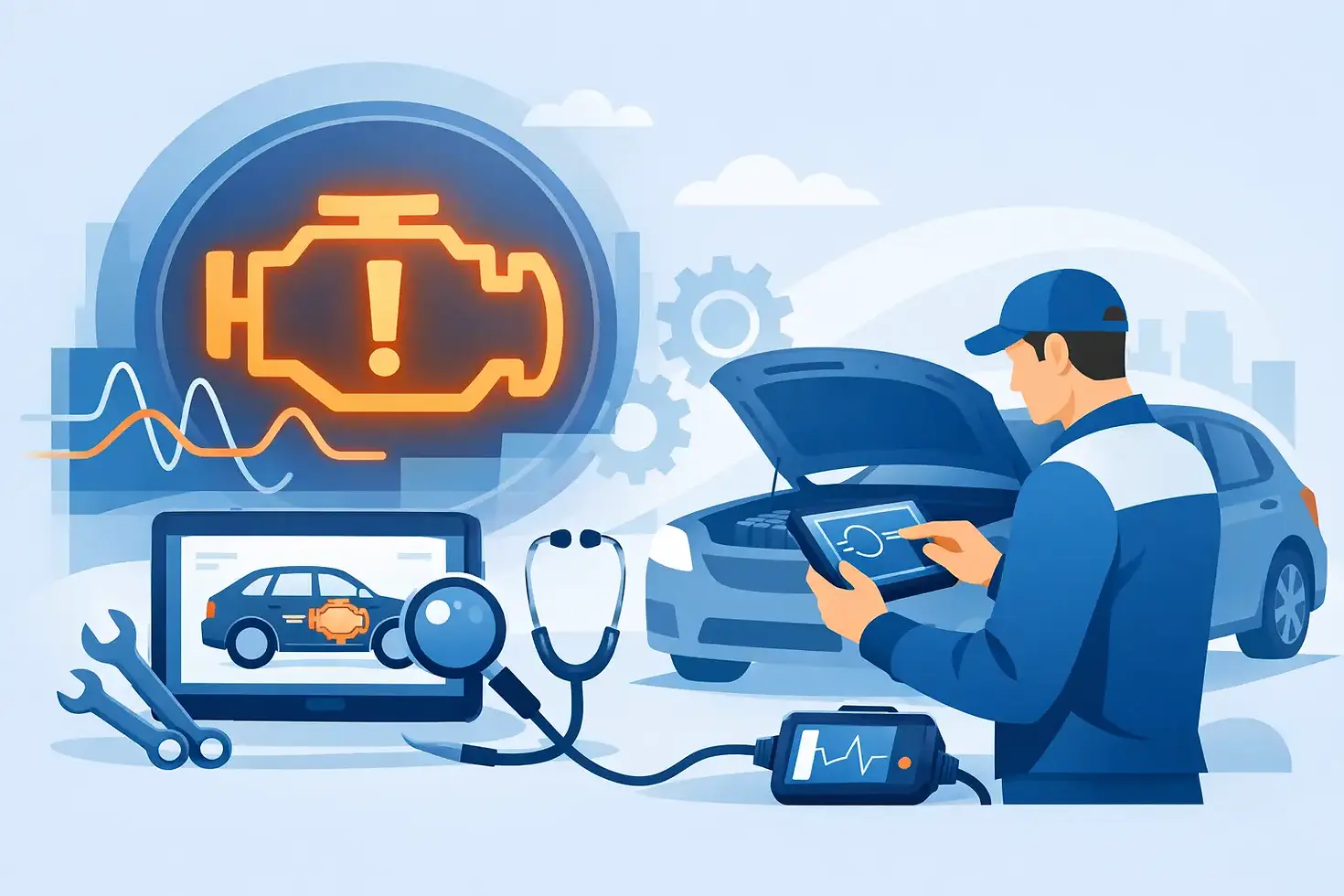
Professional check engine light diagnosis usually involves more than plugging in a scanner. A technician may review freeze-frame data, check live sensor readings, inspect wiring and connectors, test vacuum leaks, verify ignition and fuel system operation, and confirm whether the fault is current, intermittent, or history only.
That approach matters because it leads to accurate repairs. It also helps avoid the common problem of changing one part after another while the warning light keeps coming back.
Flashing light vs steady light
Not every check engine light carries the same level of urgency. How the light behaves tells you a lot.
If the light is steady, the problem may still be serious, but the vehicle is often drivable for the short term. That said, "drivable" does not mean "ignore it for weeks." Fuel economy can drop, emissions can increase, and a smaller issue can become a larger one.
If the light is flashing, treat it as urgent. A flashing check engine light often points to a severe misfire that can damage the catalytic converter and cause more costly repairs very quickly. If the vehicle is running rough, shaking, losing power, or smelling strongly of fuel, it is best to stop driving and arrange service as soon as possible.
This is one of those situations where waiting usually does not save money. It often does the opposite.
Common causes behind the warning light
There is no single most likely answer for every vehicle, but some issues come up more often than others. Ignition problems, such as worn spark plugs or failing coils, are very common, especially when a vehicle starts to hesitate or misfire. Fuel system issues, including injector problems or low fuel pressure, can also trigger the light and affect performance.
Emissions-related faults are another frequent cause. This can involve oxygen sensors, EVAP leaks, purge valves, catalytic converter efficiency, or air-fuel ratio issues. On some vehicles, a loose or damaged gas cap can trigger an evaporative system code. It is simple, but not always the whole story.
There are also cases where the check engine light appears alongside other symptoms, such as hard starting, stalling, reduced power, rough idle, poor acceleration, or increased fuel consumption. When those symptoms are present, diagnosis becomes even more important because they help narrow down the source of the fault.
What to do when the light comes on
Start with the basics. If the vehicle seems to be running normally, check that the gas cap is properly tightened. If it was loose, it may take some driving cycles for the light to reset, so that alone does not confirm the issue has been solved.
Pay attention to how the vehicle feels. Is it idling rough, struggling to accelerate, or making unusual noises? Is there smoke, a fuel smell, or a noticeable drop in power? Those details matter and can help a technician speed up the diagnostic process.
If the light is steady and the vehicle feels normal, book an inspection soon rather than putting it off. If the light is flashing, or the vehicle is clearly running poorly, reduce driving and have it checked right away.
One thing worth avoiding is clearing the code without proper testing. Resetting the light can erase useful information that helps identify the fault. It may also make the issue harder to reproduce if the problem is intermittent.
What happens during professional check engine light diagnosis
A proper visit should feel clear, not confusing. The goal is not just to tell you a code number. The goal is to explain what the vehicle is doing, what tests are needed, and what repair makes sense.
A technician will typically begin by connecting a diagnostic scan tool and reviewing stored codes, pending codes, and operating data. From there, the next steps depend on the fault. Some problems require a visual inspection and basic testing. Others need deeper electrical checks, smoke testing for leaks, or road testing under certain conditions.
This is where experience matters. Two vehicles can show the same code and need completely different repairs. Good diagnostics come from understanding patterns, verifying failures, and ruling out the less obvious causes before recommending parts.
At a trustworthy shop, you should also get a straightforward explanation of the findings. If the issue is minor, you should be told that. If it is urgent, you should know why. If there are repair options, or if one problem should be handled before another, that should be communicated clearly so you can make an informed decision.
Why delaying diagnosis can cost more
A check engine light is easy to ignore when the car still starts and drives. But many problems get more expensive the longer they are left alone.
A small misfire can damage a catalytic converter. A fuel mixture issue can lead to poor combustion and increased wear. An emissions fault might start as a sensor issue but mask a larger performance problem. Even if the vehicle seems fine, efficiency can drop enough over time to cost you more at the pump.
There is also the inconvenience factor. A manageable repair booked at the right time is usually better than a breakdown that disrupts your week. For families, commuters, and business owners who depend on their vehicles, that reliability matters just as much as the repair bill.
Choosing a shop for check engine light diagnosis
This is one area where clear communication is just as important as the equipment. You want a shop that can diagnose the issue properly, explain it in plain language, and give honest advice about what needs to be done.
That means looking for a team that does more than pull codes. Ask whether they perform actual diagnostic testing, whether they will explain the cause of the warning light, and whether they provide an estimate before repairs begin. A good shop should make you feel informed, not pressured.
At Niks Auto Repair, that practical, honest approach is what many drivers are looking for. Clear answers, professional service, and repairs based on testing rather than guesswork make a real difference when a dashboard warning light appears.
When peace of mind matters most
The check engine light does not always mean disaster, but it always means your vehicle is asking for attention. The smartest move is to deal with it while you still have options, before a warning becomes a breakdown, and before a smaller repair turns into a larger one.
If your vehicle is showing a warning light, trust the process of proper diagnosis. A clear answer now can save you money, stress, and time off the road later.



Comments