
Why Car Smells Like Gas and What It Means
May 25, 2026 · 7 min read
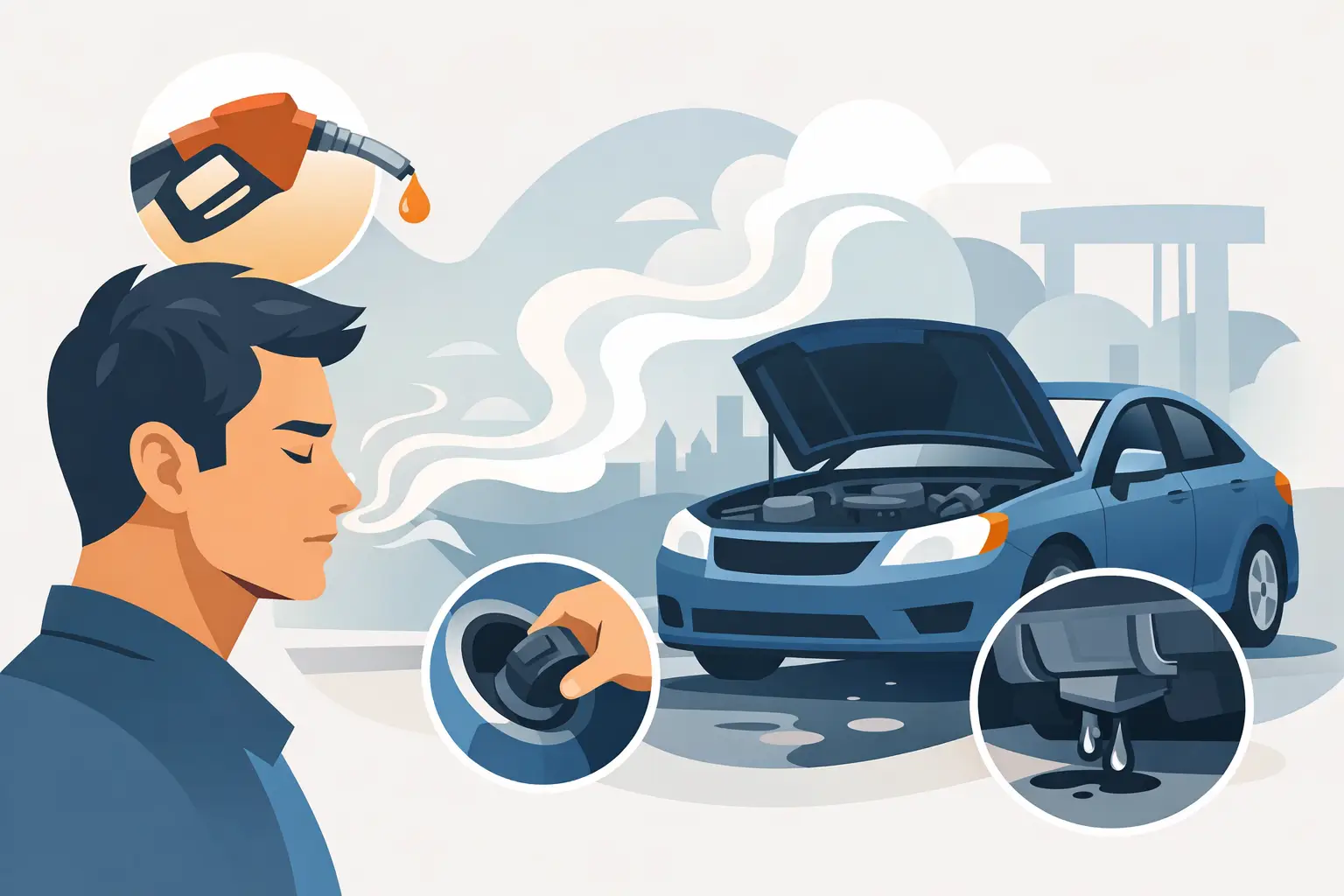
You start the car, catch that sharp fuel smell, and immediately wonder why car smells like gas when nothing seems obviously wrong. That reaction is the right one. A gasoline smell is not something to ignore, especially if it shows up regularly, gets stronger, or starts happening while you drive.
Sometimes the cause is minor, like a loose gas cap after a fill-up. Other times, it points to a fuel leak, an emissions problem, or an engine issue that needs proper diagnosis. The key is not guessing. Fuel vapours are flammable, and even a small problem can turn into a bigger repair if it is left too long.
Why car smells like gas in the first place
Modern vehicles are built to keep fuel sealed inside the tank, lines, injectors, and emissions system. In normal conditions, you should not smell raw gas in or around the vehicle for long. If you do, something is allowing fuel or fuel vapour to escape.
That does not always mean you have a major leak dripping onto the ground. In many cases, the issue is vapour-related. A worn seal, cracked hose, faulty purge valve, or evaporative emissions fault can let fumes escape without leaving a visible puddle. That is one reason drivers get confused. The smell is real, but the source is not always easy to spot without testing.
The most common reasons your car smells like gas
A loose, damaged, or missing gas cap
This is the simplest place to start. If the gas cap is not tightened properly, fuel vapours can escape from the tank. Some caps also wear out over time, and the seal stops doing its job.
If the smell started right after refuelling, check the cap first. Tighten it until it clicks, and see if the smell fades after a short drive. If the cap is cracked, the seal is dry, or it no longer tightens properly, replacing it is a small fix that can save you a diagnostic headache.
Fuel leak from a line, hose, or connection
A leaking fuel line or hose is a more serious problem. Rubber fuel hoses can crack with age, especially in vehicles exposed to large temperature swings, road salt, and long-term wear. Metal lines can corrode as well, which matters in Canadian conditions where winter road treatment can speed up rust.
You may notice the smell more strongly near the rear of the vehicle, under the hood, or after parking in a garage. In some cases, there may be hard starting, poor fuel economy, or visible dampness around fuel system components. Even if the leak seems minor, it needs prompt attention.
Leaking fuel injectors or injector seals
Fuel injectors deliver gasoline into the engine in a controlled spray. If an injector cracks or an O-ring seal fails, raw fuel can leak around the injector instead of going where it should.
This often creates a gas smell near the engine bay. You might also notice rough idling, hesitation, or a misfire. Because fuel is close to hot engine components, this is not a wait-and-see issue.
Problems with the EVAP system
The evaporative emissions system, often called the EVAP system, captures fuel vapours and routes them back into the engine to be burned. If a charcoal canister, purge valve, vent valve, or connecting hose fails, vapours can escape and create that gas smell.
This type of problem may trigger a check engine light, but not always right away. It can also be intermittent, which makes it frustrating for drivers. One day the smell is obvious, the next day it seems gone. That does not mean the issue fixed itself.
Overfilling the fuel tank
Topping off the tank after the pump clicks off can push fuel into parts of the vapour recovery system that are meant to handle vapour, not liquid fuel. That can lead to a gas smell for a while and, in some cases, damage EVAP components.
If the smell only happens after filling up and disappears later, overfilling may be part of the issue. It is a good habit to stop when the pump clicks off.
Engine running too rich
If the engine is getting too much fuel and not enough air, unburned gasoline can make its way through the exhaust. That can create a fuel smell around the vehicle, especially at startup or while idling.
A rich-running condition can be caused by several things, including a bad oxygen sensor, faulty mass airflow sensor, leaking injector, or ignition problem. The trade-off here is that the smell may not come from a direct leak, but it still signals a problem affecting performance and fuel economy.
When the smell happens matters
Why your car smells like gas after filling up
If the smell appears only after refuelling, start with the gas cap and think about how full the tank was. A cap issue or overfilled tank is common here. If the smell happens every time you fuel up, the EVAP system should also be checked.
Why your car smells like gas under the hood
A smell strongest at the front of the vehicle often points to fuel injectors, injector seals, fuel rails, or hoses in the engine bay. In some cases, it can also relate to an engine that is running rich. Because this area contains high heat, repairs should not be delayed.
Why your car smells like gas inside the cabin
If you smell gas inside the vehicle, pay close attention. Fumes entering the cabin can come from leaks near the engine bay, underbody fuel lines, or even from the rear if vapours are being drawn in while driving. It can also happen if exhaust issues are mixing with unburned fuel smells.
Even if the car still drives normally, cabin fuel smell should be treated as a safety concern.
Signs it is time to stop driving and get it checked
A faint smell after refuelling may clear quickly. But if you notice any of the following, it is smart to stop driving the vehicle until it is inspected:
- The smell is strong or getting worse
- You see fuel dripping or wet spots under the car
- The check engine light is on
- The engine is running rough, misfiring, or stalling
- The smell is strongest under the hood or inside the cabin
- You feel dizzy or unwell from the fumes
There is no benefit in trying to push through a fuel-related problem. The cost of early diagnosis is usually far better than dealing with a fire risk, roadside breakdown, or damaged components from ongoing leaks.
Can you diagnose it yourself?
You can do a few basic checks safely. Look at the gas cap. Notice when the smell occurs - after refuelling, at startup, while idling, or all the time. Check for visible wet spots under the vehicle after it has been parked. If you can smell fuel near one end of the car more than the other, that is useful information too.
What you should not do is start probing fuel lines, disconnecting components, or searching with an open light source around raw fuel vapours. Modern fuel and EVAP systems often need smoke testing, pressure testing, scan tool data, and hands-on inspection to pinpoint the exact fault. Guessing can waste money and miss the real problem.
How a professional shop finds the cause
A proper inspection usually starts with confirming the conditions of the smell and checking for stored fault codes. From there, a technician may inspect the gas cap, fuel lines, injectors, rail connections, tank area, and EVAP components. If needed, smoke testing can reveal vapour leaks that are otherwise invisible.
This matters because two different issues can create the same symptom. A bad purge valve and a cracked fuel line can both make your car smell like gas, but the repair path is completely different. Accurate diagnosis keeps the repair focused and fair.
For drivers who want clear answers without pressure, that kind of straightforward approach matters. At Niks Auto Repair, the goal is to identify the issue properly, explain what is urgent, and help you make a sensible repair decision based on safety and condition.
Is it an expensive repair?
It depends on the cause. A gas cap is inexpensive. A hose or seal may also be fairly manageable if caught early. Replacing fuel injectors, repairing corroded lines, or solving EVAP system faults can cost more, especially if there are multiple failed parts or rust-related complications.
The bigger cost usually comes from delay. Small vapour leaks can turn into larger failures. Rich-running conditions can hurt fuel economy and damage other components. What starts as a smell can become a drivability problem or a safety issue.
The safest next step
If you are asking why car smells like gas, treat that smell as useful early warning, not something to monitor for weeks. Even when the vehicle still starts and drives fine, fuel odours mean the system is not staying sealed the way it should. Getting it checked early protects your safety, your vehicle, and often your wallet too.
If the smell is strong, persistent, or happening inside the cabin, trust your instincts and have the car inspected before it turns into a bigger problem.