
Wheel Alignment After a Pothole: When to Book
Aug 25, 2026 · 6 min read
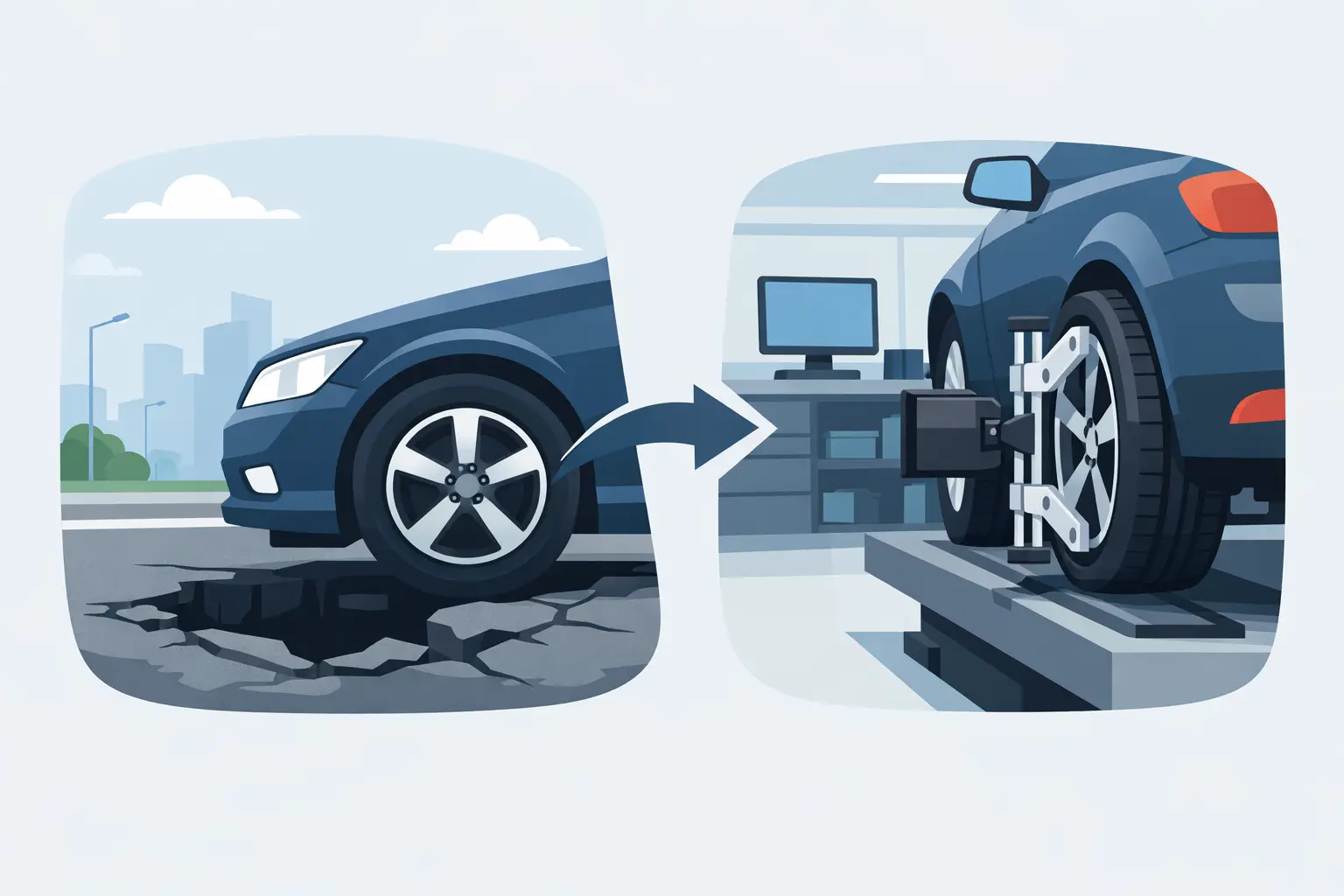
A hard pothole hit can feel minor in the moment, especially when you are trying to get to work, pick up the kids, or make a delivery. But if the steering wheel is suddenly off-centre, the vehicle pulls to one side, or a tire starts wearing unevenly, it is time to think about wheel alignment after pothole damage. A quick inspection can protect your tires, steering, suspension, and confidence behind the wheel.
Canadian roads put vehicles through a lot. Freeze-thaw cycles, construction zones, worn pavement, and spring road damage all create potholes that can deliver a sharp impact to a wheel. Not every pothole requires an alignment, but ignoring the warning signs can turn a simple service into a more expensive tire or suspension repair.
What a pothole can do to your alignment
Wheel alignment is the adjustment of the angles at which your tires meet the road. These angles help the vehicle track straight, steer predictably, and wear its tires evenly. A pothole can force a tire and wheel upward or sideways with enough force to shift those settings.
The most common changes involve toe, camber, and caster. You do not need to memorize the terms to know when something is wrong. If the vehicle no longer drives the way it did before the impact, it deserves attention. Even a small alignment change can scrub rubber off a tire faster than expected.
A severe pothole strike can also bend a wheel, damage a tire sidewall, or affect suspension and steering parts such as a control arm, tie rod, ball joint, or strut. This is why an honest alignment service starts with an inspection. Adjusting alignment angles without checking for damaged components may hide the real problem temporarily, but it will not fix it.
Signs you need wheel alignment after a pothole
The clearest sign is a vehicle that pulls or drifts left or right on a level, straight road. Road crown and wind can create a slight drift, so do not judge it on one short stretch of pavement. If you repeatedly need to correct the steering to stay centred, have the vehicle checked.
An off-centre steering wheel is another common clue. When you are driving straight, the steering wheel should sit close to level. If it is noticeably turned after a pothole hit, the alignment may have shifted. A vibration through the steering wheel, particularly at highway speed, may point to a bent wheel, tire damage, or a wheel balancing issue rather than alignment alone. It still warrants an inspection.
Look at the tires as well. Uneven wear on the inner or outer edge, feathering across the tread, or one tire wearing much faster than the others can all be related to alignment. Tire wear develops over time, so it may not be visible the day after the impact. Catching the concern early is far less costly than replacing tires before their time.
Other signs deserve immediate attention: a new thump or clunk over bumps, a tire losing air, a visible bulge in the sidewall, or a steering wheel that feels loose. These may indicate damage beyond alignment. Avoid highway driving if the vehicle feels unstable or the tire shows obvious damage.
When should you book an alignment?
If the pothole impact was hard enough to make you stop and check the vehicle, booking an inspection soon is sensible. You do not have to wait for obvious pulling or tire wear. A technician can inspect the wheels, tires, steering, and suspension, then measure the alignment only if the vehicle is safe to place on the alignment rack.
Book promptly when you notice a changed steering feel, pulling, vibration, or an off-centre wheel. It is also wise to arrange a check after replacing steering or suspension parts, installing new tires, or hitting a curb. Fleet vehicles and high-mileage commuters benefit from acting quickly because even minor tire wear adds up over many kilometres.
If there are no symptoms after a light pothole hit, you may not need an immediate alignment. Continue to pay attention over the next few drives and check tire pressures. However, a tire pressure warning light, visible wheel damage, or a sharp impact at speed is not something to put off. Those concerns call for a professional assessment.
Alignment is not the same as wheel balancing
These services are often confused, but they solve different problems. Alignment corrects the direction and angle of the wheels. Balancing corrects uneven weight distribution in a tire and wheel assembly. An imbalanced wheel often causes vibration at certain speeds, while poor alignment more often causes pulling, an off-centre steering wheel, and irregular tire wear.
A pothole can cause either issue, or both. It can also bend a rim, which may create vibration or an air leak that balancing alone cannot correct. Clear diagnosis matters because paying for the wrong service will not make the vehicle drive properly.
Why delaying the repair costs more
A vehicle can still be drivable with a slight alignment issue, but that does not make it a good idea to wait. Tires are one of the biggest costs affected by poor alignment. When they are dragged slightly sideways instead of rolling cleanly, their tread wears faster and may become noisy. Once the tread is damaged unevenly, an alignment cannot restore it.
Misalignment may also put extra strain on steering and suspension components. The exact effect depends on the vehicle, the severity of the damage, and how far it is driven, but there is little benefit to taking that risk. For drivers managing household costs or business vehicles, a timely inspection is usually the practical choice.
There is a safety angle too. Proper alignment supports predictable handling and stable braking. It will not compensate for bald tires, worn brakes, or damaged suspension, but it helps the vehicle respond as it should when you need to avoid a hazard or drive through wet conditions.
What happens during a professional alignment check
A proper appointment should begin with questions about what happened and what you have felt since the pothole strike. The technician should inspect tire condition and pressure, check for obvious wheel damage, and look for looseness or wear in relevant steering and suspension components.
If the parts are in good condition, alignment equipment measures the existing angles against the manufacturer’s specifications. The technician adjusts what is adjustable on your vehicle and verifies that the steering wheel is centred. Some vehicles need additional parts before alignment can be completed correctly. When that happens, a trustworthy shop should explain the issue, show you the concern where possible, and provide clear pricing before moving ahead.
At Niks Auto Repair, the goal is not to sell work you do not need. It is to identify whether the pothole affected alignment, a tire, a wheel, or a suspension component, then recommend the repair that gets you safely back on the road.
A few steps to take after the impact
When it is safe to stop, walk around the vehicle and look for a low tire, a damaged sidewall, a cracked wheel, or anything rubbing near the tire. Do not touch hot brake components or crawl under the vehicle roadside. If the tire is flat, the sidewall has a bulge, or the vehicle is difficult to control, arrange assistance instead of continuing the trip.
If the vehicle seems normal, note where and when the pothole happened and pay attention during the next drive. Keep both hands on the wheel, test the brakes gently in a safe area, and watch for pulling or vibration. This information helps a technician narrow down the cause faster.
A pothole is often unavoidable. The next decision is yours: if the vehicle feels different, have it checked before that one rough hit becomes a set of prematurely worn tires or a more involved repair.