
Vehicle Electrical Troubleshooting: Signs to Act
Sep 18, 2026 · 6 min read
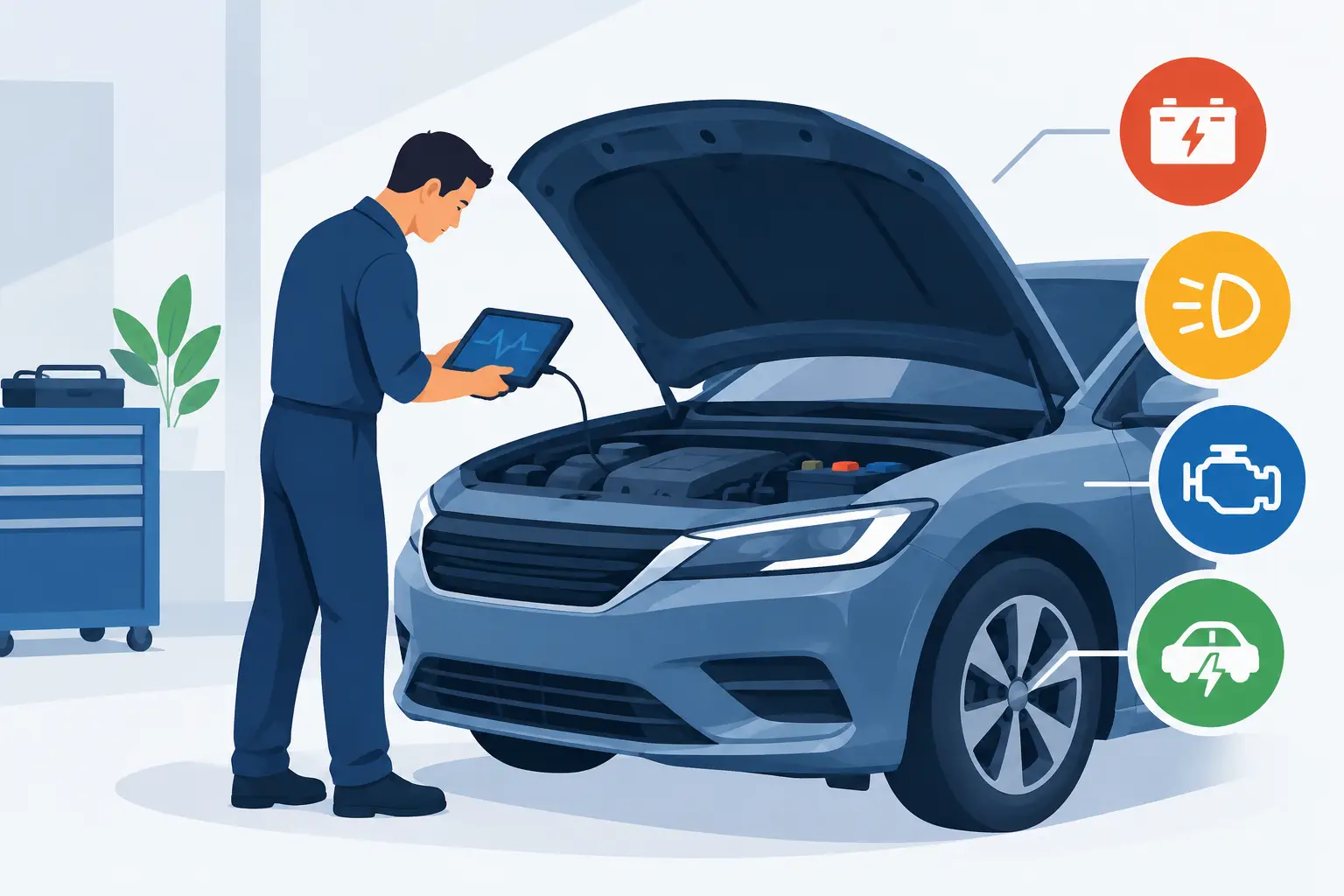
A vehicle that will not start on a cold Canadian morning is not always dealing with a bad battery. Dim lights, a flashing battery warning lamp, intermittent power windows, or a radio that resets can all point to an electrical issue. Proper vehicle electrical troubleshooting identifies the real cause before parts are replaced, saving time, money, and the frustration of a repeat breakdown.
Modern vehicles rely on a connected electrical system for starting, charging, lighting, safety features, heating controls, sensors, and communication between modules. That makes accurate diagnosis more valuable than guesswork. A weak battery may be the problem, but it may also be the result of a failing alternator, corroded connection, parasitic draw, damaged wiring, or a component that is not shutting off when the vehicle is parked.
When electrical symptoms need attention
Electrical faults do not always stop a vehicle immediately. Many begin as small, inconsistent problems that are easy to dismiss until they become inconvenient or unsafe. Paying attention early can prevent a no-start situation in a driveway, parking lot, or during a busy workday.
Watch for headlights that dim at idle or brighten noticeably when the engine is revved. This can indicate a charging-system concern. A battery warning light should also be checked promptly, even when the vehicle still starts. That light does not simply mean the battery is low. In many vehicles, it signals that the charging system is not maintaining the proper voltage.
Slow cranking is another common warning sign. If the engine turns over reluctantly, especially after sitting overnight, the battery could be weak. However, loose battery terminals, poor ground connections, starter trouble, and internal corrosion can produce similar symptoms. Replacing the battery without testing the rest of the system may only provide a temporary fix.
Other signs deserve the same attention: blown fuses that keep returning, burning smells, flickering dash lights, accessories that work only sometimes, malfunctioning power locks, or warning lights that appear without an obvious mechanical issue. If you notice smoke, hot wiring smells, repeated fuse failures, or electrical problems affecting headlights, brake lights, or wipers, stop driving when it is safe to do so and arrange professional help. These issues can affect visibility, safety systems, and in rare cases create a fire risk.
What vehicle electrical troubleshooting should include
Reliable diagnosis follows a process. It starts with listening to the driver. Knowing whether the issue happens in cold weather, after rain, while idling, after a boost, or only when a certain accessory is used gives a technician useful direction.
Battery and terminal testing
The battery is the starting point, but a voltage reading alone does not tell the whole story. A battery can show normal voltage with no load and still fail when asked to start the engine. A proper test checks battery condition, available starting power, terminal security, and signs of corrosion.
White, blue, or green buildup around battery terminals can restrict current flow. Cleaning and protecting the connections may solve a simple issue, but severe corrosion can damage cables or hide problems farther down the line. In Canadian winters, battery performance drops as temperatures fall, so a marginal battery often reveals itself during the first cold spell.
Alternator and charging-system checks
Once the engine is running, the alternator should replenish the battery and power the vehicle’s electrical needs. Technicians check charging voltage, wiring connections, belt condition where applicable, and output under load. This matters because an alternator can appear acceptable with little demand, then struggle when headlights, rear defrost, blower motor, heated seats, and wipers are operating.
Overcharging is also a concern. Too much voltage can shorten battery life and damage sensitive electronics. The goal is not simply to see whether the alternator is producing power, but whether it is regulating power correctly for that vehicle.
Starter, grounds, fuses, and wiring
A clicking sound when turning the key or pressing the start button may suggest a weak battery, but it can also be a starter circuit problem. A technician can test voltage drop through cables and connections to find resistance that a quick visual inspection might miss.
Ground connections are equally important. Your vehicle uses its metal body and engine as part of the electrical return path. A loose, corroded, or damaged ground can cause strange symptoms across multiple systems, including poor starting, sensor faults, dim lighting, and erratic dashboard warnings.
Fuses protect circuits from excess current. When a fuse blows once, it may have been caused by a temporary overload. When it blows repeatedly, replacing it again and again is not the answer. There is likely a shorted wire, failed motor, damaged socket, or faulty component that needs to be located and repaired.
Scan tools and module diagnosis
Many electrical faults are recorded as diagnostic trouble codes, even if no warning light remains on. A professional scan tool can access codes and live data from systems such as the engine, transmission, anti-lock brakes, airbags, body control module, and climate controls.
A code is a clue, not an automatic parts list. For example, a sensor circuit code may be caused by the sensor itself, a damaged connector, poor wiring, a weak reference voltage, or an issue in the control module. Good diagnosis confirms the cause before recommending repair.
Why intermittent problems take time
Intermittent electrical concerns can be among the most difficult vehicle issues to diagnose because they may not occur while the vehicle is in the shop. A power window that works perfectly during an inspection may fail only after rain. A battery drain may happen overnight but disappear during a short daytime test.
This is where clear information from the owner helps. Note when the problem occurs, how often it happens, what was operating at the time, and whether weather or temperature seems related. A short video of a warning light, unusual sound, or flickering display can also help confirm the concern.
Some faults require extended testing. A parasitic draw test, for instance, may involve monitoring the vehicle after modules have gone to sleep to identify an electrical component that is staying active and draining the battery. It takes patience, but it is better than replacing good parts in the hope that the problem disappears.
Avoid the most expensive shortcuts
A boost can get a vehicle moving, but it does not explain why the battery went flat. Similarly, clearing a warning light may make the dashboard look normal while the underlying issue remains. These temporary measures have a place in an urgent situation, but they should be followed by proper inspection.
Aftermarket accessories can also complicate diagnosis. Remote starters, dash cameras, audio upgrades, trailer wiring, auxiliary lighting, and phone chargers are useful when installed correctly. Poor connections, undersized wiring, or incorrect fuse protection can create battery drains and circuit failures. If a problem began after an accessory installation, mention it during the appointment. That information can save diagnostic time.
Trying to repair wiring without the right tools can create more damage than the original fault. Modern circuits may be sensitive to resistance and voltage changes, and incorrect probing can harm connectors or modules. Basic owner checks are reasonable: look for loose battery terminals, make sure lights are switched off, and check whether an accessory has been left plugged in. Beyond that, testing is usually the safer and more cost-effective choice.
A practical plan when your car has an electrical issue
Start by considering the urgency. If the vehicle has a burning smell, smoke, exposed wiring, recurring fuse failures, or safety-related lights and controls that are not working, do not delay. If it starts but shows early warning signs such as slow cranking or flickering lights, book an inspection before the problem leaves you stranded.
Bring any relevant details to the service visit, including recent repairs, battery age, accessory installations, warning messages, and when the issue first appeared. A professional shop should explain what testing found, which repair is necessary now, and which maintenance items can reasonably wait. Honest recommendations matter because electrical repairs range from a simple terminal cleaning to more involved wiring or module work.
At Niks Auto Repair, the focus is on clear diagnosis and dependable repairs, so you can make an informed decision without unnecessary confusion. Electrical problems can be stressful, especially when your vehicle is needed for work, family commitments, or daily errands. Getting the cause identified early gives you the best chance to keep a small warning sign from becoming an unexpected roadside problem.