
Portable Jump Starter Review for Canadian Drivers
Aug 23, 2026 · 7 min read
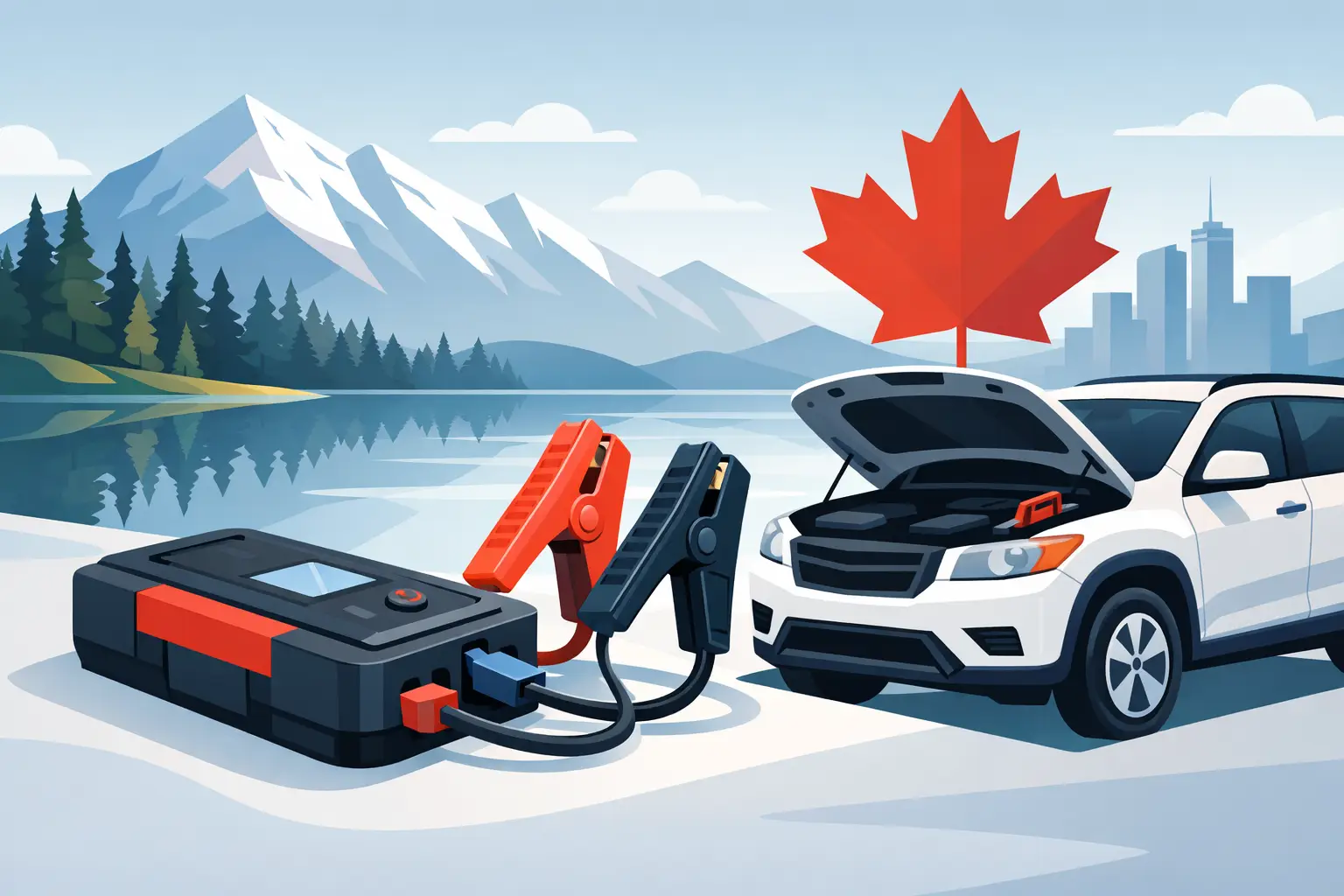
A dead battery has a way of appearing at the worst possible time: before an early shift, in a crowded grocery-store lot, or on a cold Canadian morning when your vehicle simply will not crank. A portable jump starter can save time and stress, but this portable jump starter review focuses on what drivers should look for before trusting one in a real roadside situation.
These compact battery packs are not a replacement for regular battery maintenance or professional diagnosis. They are, however, a practical emergency tool when chosen properly, stored correctly, and used with care. The best choice is not always the unit with the largest number printed on the box. It is the one that suits your engine, starts reliably in the cold, and has safety features that protect you and your vehicle.
What a Portable Jump Starter Should Do Well
A portable jump starter stores enough electrical energy to help turn over an engine when the vehicle battery is too weak to do the job. Most models include booster cables with clamps, an on-off function, charge indicators, and USB ports for phones or other small devices. Some add an air compressor, flashlight, work light, or 12-volt accessory outlet.
For most drivers, the core function matters far more than the extras. A good unit should provide clear instructions, secure clamp connections, reverse-polarity protection, and enough starting capacity for your vehicle. It should also hold its own charge for a reasonable period while sitting in the trunk or garage.
The trade-off is straightforward. Small units are easy to carry and often work well for a compact car with a healthy battery that has simply been drained. Larger units are better suited to trucks, SUVs, diesel engines, or vehicles that face repeated cold-weather starts, but they cost more and take up more space. A built-in compressor may be useful, although it adds bulk and is another component to maintain.
Portable Jump Starter Review: The Specs That Matter
Marketing claims can be confusing, especially when every package leads with a large peak-amp number. Peak amperage can be a helpful comparison point, but it does not tell the whole story. Battery chemistry, cable quality, clamp design, temperature, and the condition of the vehicle all affect real starting performance.
Match the starter to your engine
Check the manufacturer’s stated engine-size rating, not only the advertised peak amps. A unit rated for a small gas engine may be perfectly capable for a four-cylinder commuter car but a poor choice for a large V8 pickup or diesel work vehicle. If your vehicle has a larger engine, start-stop technology, or accessories that place extra demand on the battery, leave yourself a reasonable margin rather than buying the minimum-rated model.
Diesel engines generally need more starting power, particularly in winter. Fleet operators and drivers who travel outside urban areas should prioritize a higher-capacity unit with a clear diesel rating. It may be larger, but that extra capacity can be worthwhile when roadside help is not close by.
Cold-weather performance is a Canadian priority
Lithium jump starters are convenient, lightweight, and common, but extreme cold reduces battery performance. A booster pack that works easily at mild temperatures may have less available power after sitting overnight in a freezing vehicle. The same is true of your car battery, which is why winter exposes problems that seemed minor in summer.
Look for a model with a stated operating-temperature range suitable for Canadian conditions. Keep in mind that a jump starter is usually best stored indoors during severe cold, then placed in the vehicle when needed for travel. If it must remain in the vehicle, inspect its charge level more often. Never assume it is ready because it worked months ago.
Safety features are not optional
A quality jump starter should make an emergency easier, not create a costly electrical problem. Reverse-polarity protection helps prevent damage if clamps are connected to the wrong terminals. Spark-resistant clamps, short-circuit protection, overcharge protection, and clear status lights are also worthwhile features.
The clamps themselves deserve attention. Flimsy clamps with weak springs may not grip the terminals securely, particularly when corrosion is present or space under the hood is limited. Strong, well-insulated clamps and flexible cables make a noticeable difference when you are using the unit in poor weather or low light.
Useful extras versus unnecessary bulk
A USB charging port is genuinely useful when your phone battery is low during a breakdown. A bright flashlight or work light can also help at night. These features add practical value without taking attention away from the booster function.
An integrated tire inflator can be convenient for drivers who want one emergency kit rather than separate tools. Still, do not buy a jump starter mainly for the compressor. Check the compressor’s duty cycle, hose length, pressure gauge, and charging method. A weak inflator can be slow and frustrating when a tire is seriously low.
How Different Types Compare
| Type of unit | Best for | Main advantage | Main limitation | |---|---|---|---| | Compact lithium booster | Small cars and routine commuting | Light, easy to store, often charges phones | Less reserve for larger engines and extreme cold | | Mid-capacity lithium booster | Most sedans, crossovers, and SUVs | Strong balance of size and starting power | Must still be kept charged and protected from severe cold | | High-capacity booster | Trucks, diesel vehicles, fleets | Better reserve and larger-engine capability | More expensive and less convenient to carry | | Booster with compressor | Drivers building an all-in-one emergency kit | Can address a low tire and weak battery | Bulkier, with more parts to maintain |
For many Canadian households, a mid-capacity lithium booster is the sensible middle ground. It is compact enough to keep available, yet has more reserve than the smallest phone-sized units. The right answer changes if you drive a diesel pickup, operate a service vehicle, or regularly travel rural highways in winter.
What a Jump Starter Cannot Fix
A jump starter gives a weak battery an immediate boost. It does not repair the reason the battery went flat. If your vehicle starts after a boost but struggles again the next day, there may be a worn-out battery, a charging-system issue, corroded connections, a parasitic electrical draw, or a starter problem.
Do not keep boosting the vehicle and hope the issue disappears. Repeated jump-starting can leave you stranded and may put strain on electrical components. A professional battery and charging-system test is a better next step, especially before winter or a long trip.
There are also times when a booster should not be used. If the battery case is cracked, swollen, leaking, frozen, or giving off a strong sulphur smell, stop and seek professional assistance. If you are unsure which terminal is positive or negative, consult the owner’s manual instead of guessing.
Safe Use at the Roadside
Before connecting the booster, park safely, turn the ignition off, and switch off lights, climate controls, and other electrical loads. Confirm that the jump starter has enough charge. Connect the positive clamp to the positive battery terminal, then connect the negative clamp to the vehicle’s approved ground point or negative terminal as directed by the vehicle and jump starter instructions.
Once the clamps are secure, turn on the booster if the model requires it and attempt to start the vehicle. Avoid long, repeated cranking attempts. If the engine does not start after a few tries, disconnect the unit according to its instructions and look for another cause. Continuing to crank can drain the booster and may overheat the starter motor.
After the engine starts, remove the clamps in the recommended order and allow the vehicle to run. Driving for a short time may help restore some charge, but it is not a reliable test of battery health. Recharge the portable unit as soon as possible so it is ready for the next emergency.
Buying Advice From a Repair Perspective
Choose a jump starter from a reputable manufacturer with clear engine ratings, a proper warranty, and instructions you can understand. Be cautious with unusually cheap products that make oversized power claims but provide little information about safety protection, cold-weather use, or service support.
Before relying on any unit, charge it fully, read the manual, and learn where the positive terminal and approved ground point are on your vehicle. Keep it with your owner’s manual, gloves, and a flashlight. A small amount of preparation is far better than trying to decode warning lights and clamp connections on the shoulder of a highway.
At Niks Auto Repair, we see many no-start calls that could have been avoided with a battery test before temperatures drop. A dependable portable booster is good insurance, but it works best alongside a healthy battery, clean terminals, and regular maintenance.
If your vehicle needs frequent boosts, treat the jump starter as a way to get home safely, not as a permanent repair. Have the battery and charging system checked, then keep your booster charged for the unexpected day it can make a real difference.