
OEM vs Aftermarket Accessories: Which Fits?
Sep 2, 2026 · 6 min read
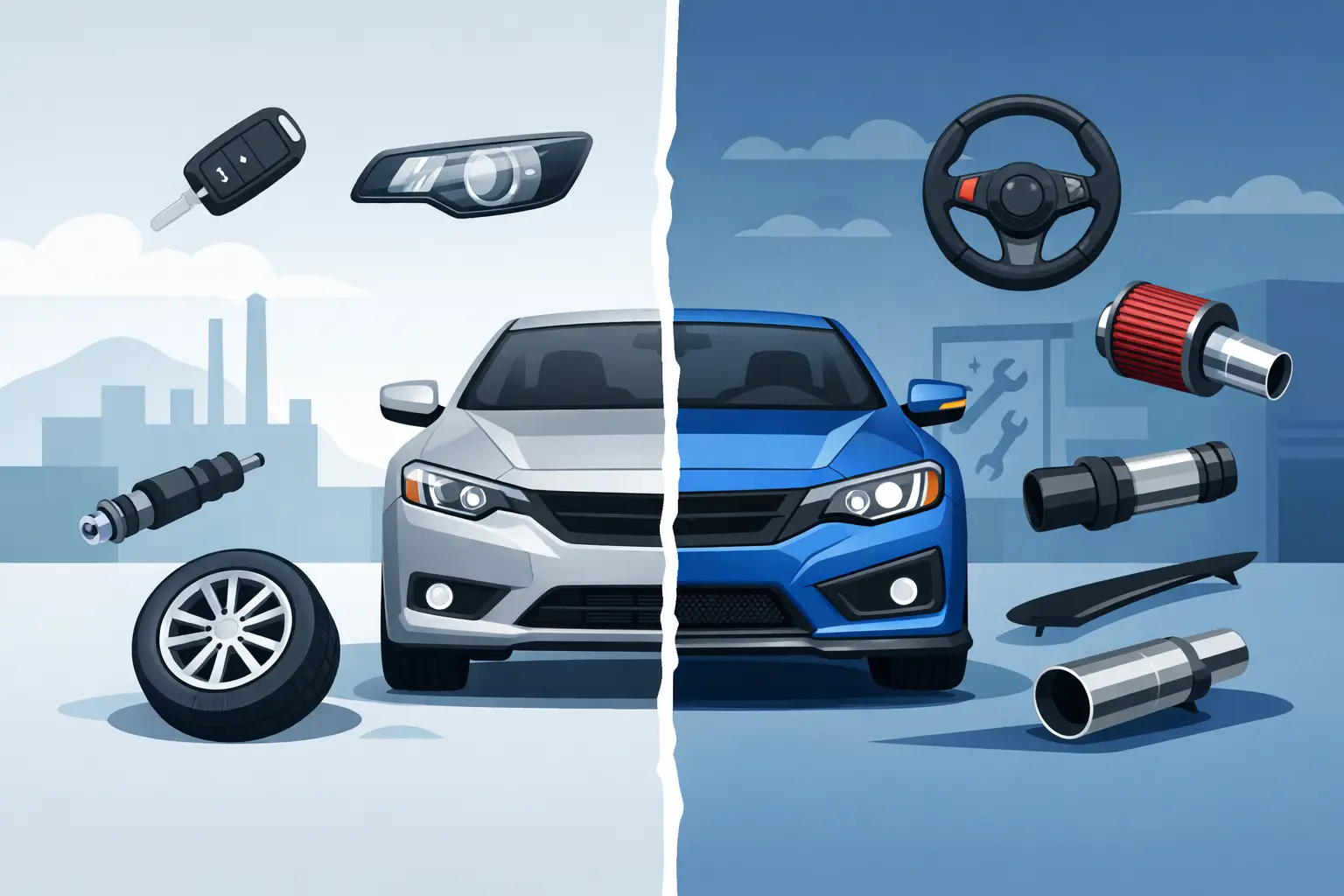
A set of floor mats, winter wiper blades, roof rack or replacement headlight can look like a simple purchase. But OEM vs aftermarket accessories is not only a question of brand name or price. The right choice can affect how well an accessory fits, how long it lasts, whether it protects your vehicle properly, and in some cases, how safely it performs on Canadian roads.
For most drivers, neither option is automatically better. OEM accessories often offer predictable fit and finish, while aftermarket choices can provide more selection and better value. The practical answer depends on the part, your vehicle, your budget and what you expect it to do.
What OEM accessories mean
OEM stands for Original Equipment Manufacturer. In plain terms, these are accessories made by, or made specifically for, your vehicle’s manufacturer. A genuine OEM cargo liner for a Honda, for example, is designed around that particular model’s cargo area, mounting points and dimensions.
The main benefit is confidence in compatibility. OEM parts and accessories are built to meet the manufacturer’s specifications, so installation is usually straightforward and the finished result tends to look like it belongs on the vehicle. This matters when an accessory connects to electrical systems, safety equipment or body mounting points.
OEM products may also be the sensible choice for newer vehicles, leased vehicles or vehicles still covered by a factory warranty. If appearance, exact fit and manufacturer-backed coverage are your top priorities, paying more for OEM can be worthwhile.
That said, OEM does not always mean the only high-quality option. Vehicle manufacturers do not make every component themselves, and many aftermarket companies specialize in products that meet or exceed original specifications.
What aftermarket accessories mean
Aftermarket accessories are made by companies other than the original vehicle manufacturer. This category is broad. It includes inexpensive universal phone mounts and seat covers, but it also includes respected brands that produce heavy-duty suspension components, premium brake parts, vehicle-specific floor liners, towing equipment and lighting systems.
The advantage is choice. Aftermarket manufacturers can offer styles, materials and features that may not be available from the dealership. A driver who needs a more durable all-weather mat, a higher-capacity roof rack or a better solution for a work vehicle may find more suitable options outside the OEM catalogue.
Price is another factor. Aftermarket accessories are often less expensive than OEM versions, especially for common items. However, low cost alone should never decide the purchase. A poorly fitting accessory can wear through carpet, rattle loose, interfere with visibility or fail when you need it most.
OEM vs aftermarket accessories: the differences that matter
The best comparison is not simply "genuine" versus "non-genuine." It is a comparison of fit, quality, support and intended use.
Fit and installation
OEM accessories are generally designed for a precise vehicle fit. This can reduce installation time and help avoid issues such as loose trim, blocked sensors or wiring that does not match factory connectors. For items like parking sensors, trailer wiring, camera systems and roof rails, proper fit is more than a cosmetic concern.
Aftermarket accessories range from vehicle-specific products to universal products. A quality vehicle-specific accessory can fit just as well as OEM, but a universal option may require adjustments. Before buying, confirm the exact year, make, model and trim of your vehicle. Small differences between trims can matter, particularly for electronics and body-mounted equipment.
Cost and value
OEM accessories commonly cost more because they carry the vehicle manufacturer’s branding, testing and distribution costs. In return, you usually get consistency and a clear fitment path.
Aftermarket products can offer strong value, particularly when sourced from a reputable manufacturer. A well-made aftermarket cabin filter, set of all-weather mats or hitch can save money without sacrificing performance. The key is comparing like with like. An OEM accessory should not be compared with the cheapest online alternative if materials, warranty and fitment are not equivalent.
A good purchase is not always the lowest-priced purchase. If an accessory lasts through several Canadian winters, protects the vehicle from damage or prevents repeat installation costs, it may be the better value over time.
Quality and durability
OEM quality is usually predictable, but the product may be designed for average use rather than demanding conditions. For example, an OEM splash guard may be perfectly adequate for normal driving, while an aftermarket option may use thicker material for drivers who regularly travel gravel roads or face heavy snow and slush.
With aftermarket accessories, quality varies more widely. Look at the material, mounting hardware, weather resistance and warranty rather than relying on packaging claims. For electrical accessories, proper weather sealing, fuse protection and connector quality deserve close attention. For towing or load-carrying equipment, capacity ratings and installation requirements are essential.
Warranty and vehicle protection
Many drivers worry that an aftermarket accessory will automatically void their vehicle warranty. That is not generally how warranty coverage works. An aftermarket product does not normally cancel the entire vehicle warranty simply because it was installed. However, if that accessory causes damage or contributes to a failure, the related repair may not be covered.
For instance, an improperly installed remote starter could create an electrical problem. A poorly mounted bike rack could damage body panels or a liftgate. In these cases, the concern is the connection between the accessory and the damage, not merely the fact that the part is aftermarket.
Keep receipts, follow installation instructions and choose a qualified installer for accessories involving wiring, safety systems, towing, suspension or major vehicle modifications. Clear documentation protects you and makes future diagnosis easier.
When OEM is usually the better choice
OEM is often the practical choice when the accessory integrates directly with the vehicle. This includes factory-style wiring harnesses, sensors, cameras, electronic modules, replacement keys and some trim pieces. Exact compatibility can prevent frustrating warning lights, fitment problems and unnecessary diagnostic costs.
It is also worth considering OEM when preserving resale value matters to you. A clean, correctly installed OEM accessory may appeal to a future buyer because it looks original and is easy to identify. This can be especially useful on newer, premium or leased vehicles.
If the price difference is modest, the convenience of an OEM accessory may outweigh the time spent researching alternatives. There is real value in knowing a part is designed for your vehicle from the start.
When aftermarket is the smarter buy
Aftermarket often makes sense for accessories where specialized design, durability or personal preference matters more than factory branding. All-weather mats, cargo organizers, seat protection, dash cameras, roof storage, work lighting and some towing accessories are common examples.
A family vehicle may benefit from a deeper aftermarket cargo liner that contains spills better than the factory option. A contractor may need a rack system with a higher functional capacity. A commuter may prefer a dash camera with recording features that a manufacturer does not offer. In these situations, the right aftermarket product can be more useful than OEM.
Aftermarket can also be the better route for older vehicles where OEM accessories are discontinued, difficult to source or priced out of proportion to the vehicle’s value. The goal is not to spend the least possible. It is to choose a dependable product that suits the vehicle and the job.
Ask these questions before you buy
Start with the accessory’s purpose. Is it mainly for appearance, convenience, protection, safety or added capability? The more directly it affects vehicle operation or occupant safety, the more careful you should be about fitment, ratings and installation.
Next, consider your driving conditions. Canadian winters, road salt, temperature swings and rough roads can expose weak materials quickly. An accessory that performs well in mild conditions may not hold up through freezing temperatures, slush and repeated cleaning.
Finally, think about who will install it. Some accessories are easy to fit at home. Others require proper tools, electrical knowledge or calibration. Saving money on the product can become expensive if installation causes damage, leaks, warning lights or a failed component later.
For accessories that involve wiring, towing equipment, suspension components or safety-related parts, professional advice is often the safest investment. An experienced mechanic can confirm compatibility before money is spent and install the product correctly.
Before you choose between OEM and aftermarket, bring the vehicle details and the accessory you are considering to a trusted shop. At Niks Auto Repair, clear advice starts with understanding how you use your vehicle, so you can spend with confidence on an accessory that genuinely serves you.