
How to Check Tire Pressure the Right Way
Sep 12, 2026 · 6 min read
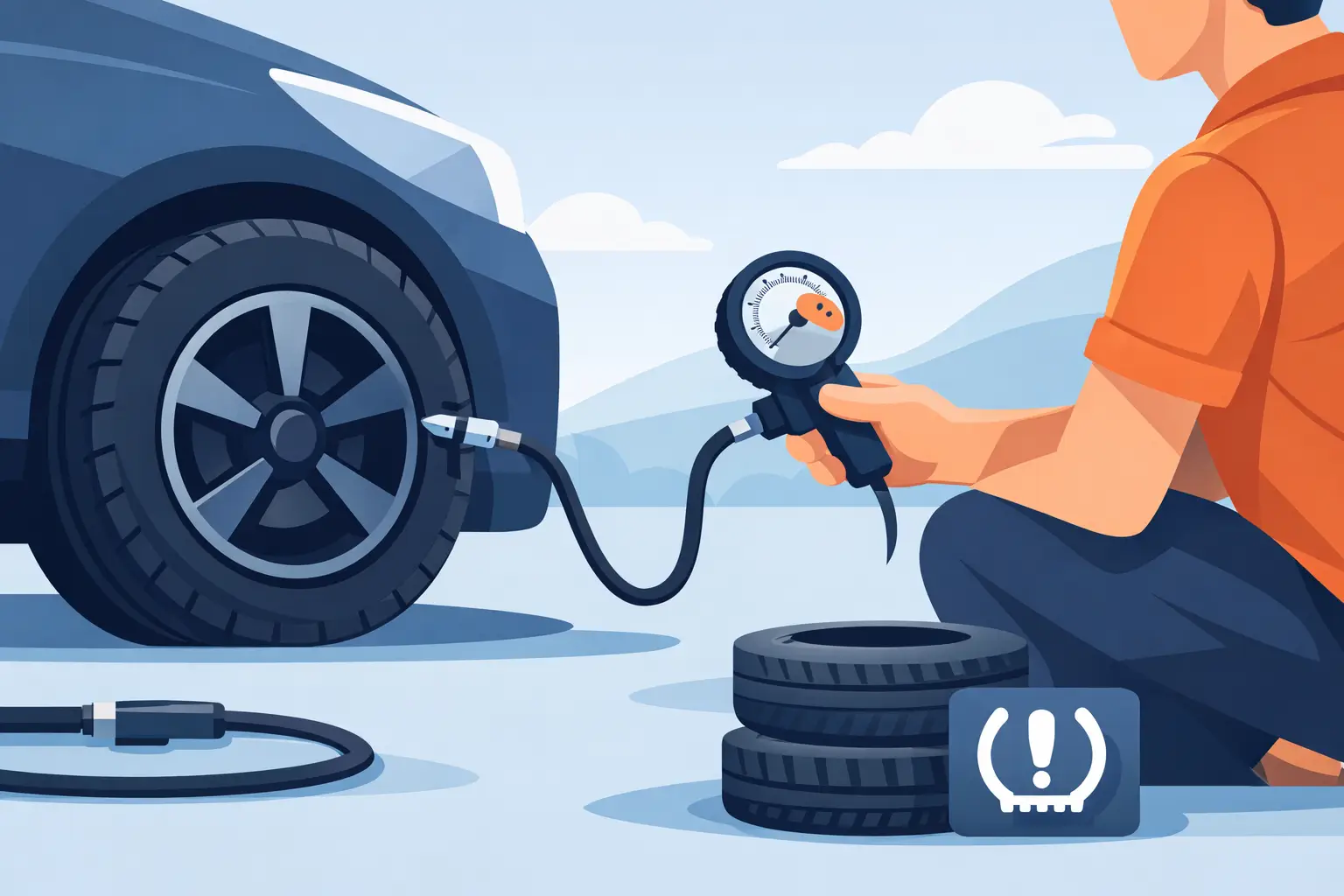
A tire can look perfectly normal and still be several PSI below where it should be. That is why knowing how to check tire pressure is one of the simplest ways to protect your safety, fuel economy, and tire investment. It takes only a few minutes, requires very little equipment, and can help you spot a problem before it becomes a roadside inconvenience.
For Canadian drivers, regular checks matter even more when temperatures change quickly. Cold weather lowers tire pressure, while long highway drives and warmer conditions raise it. The goal is not to chase every small fluctuation. It is to start with the manufacturer’s recommended cold pressure and keep all four tires in a safe, consistent range.
Why correct tire pressure matters
Tires are the only part of your vehicle that touch the road. When they are underinflated, more of the tire surface flexes and contacts the pavement. That creates heat, increases rolling resistance, and causes the outer edges of the tread to wear sooner. Your vehicle may also feel less responsive in turns and take longer to stop, particularly on wet or snowy roads.
Overinflated tires create a different problem. They can make the ride feel harsher and reduce the amount of tread contacting the road. The centre of the tire may wear faster, and the tire can be more vulnerable to damage from potholes or rough pavement.
The right pressure supports predictable handling, even tread wear, and better fuel use. It will not prevent every tire issue, but it is practical preventive maintenance that costs almost nothing.
What you need to check tire pressure
A basic handheld tire pressure gauge is the most reliable tool for this job. Digital gauges are easy to read, while pencil-style and dial gauges also work well when they are in good condition. Many air pumps at fuel stations include a gauge, but it is wise to verify the reading with your own gauge when possible.
You will also need access to air if the tires need topping up. A portable inflator is convenient at home, especially during winter, but a service station air pump can do the job. Keep the valve cap from each tire somewhere clean while you work. The cap helps keep dirt and moisture out of the valve stem, so it should always go back on.
How to check tire pressure accurately
Check pressure when the tires are cold. In practical terms, that means the vehicle has been parked for at least three hours or has been driven less than a few kilometres at low speed. Driving warms the air inside the tires and raises the reading, which can lead you to remove air that the tire actually needs once it cools down.
1. Find the recommended PSI
Look for the tire information label on the driver’s door jamb. On some vehicles, it may be inside the fuel door or listed in the owner’s manual. This label gives the recommended front and rear tire pressures, usually measured in PSI or kPa.
Use the number on the vehicle label, not the maximum pressure printed on the tire sidewall. The sidewall number is the tire’s maximum inflation limit, not the pressure your vehicle should normally run. Front and rear pressures may be different, particularly on SUVs, pickups, and vehicles carrying heavier loads.
2. Remove the valve cap and take a reading
Unscrew the valve cap from one tire. Press the gauge firmly and straight onto the valve stem. You should hear a brief burst of air, but the hissing should stop once the gauge forms a seal. If it continues, reposition the gauge and try again.
Read the pressure and compare it with the recommended cold PSI. Write the readings down if you are checking several tires or if you are trying to monitor a slow leak. Repeat the process for all four tires.
Do not forget the spare tire if your vehicle has a full-size or compact spare. Spares are easy to overlook, yet they can be unusable when needed most. Their recommended pressure is often much higher than the road tires, so check the label or owner’s manual.
3. Add or release air carefully
If a tire is below the recommended pressure, attach the air hose and add air in short bursts. Stop and check with your gauge after each burst. It is easier to add a little more air than to correct a tire that has been overfilled.
If the tire is too high, press the small pin inside the valve stem briefly to release air, then recheck. Small adjustments are normal. Avoid releasing a large amount at once, especially when checking tires outdoors in cold weather.
4. Refit the cap and check the others
Replace the valve cap firmly, but do not overtighten it. Then move to the next tire and repeat the same process. Consistency matters. One tire that is much lower than the others can affect handling and may point to a puncture, damaged valve stem, leaking bead, or wheel issue.
How often should you check tire pressure?
A monthly check is a sensible routine for most drivers. Check again before a long road trip, before carrying a heavy load, and whenever the temperature drops sharply. A change of about 5 to 6 degrees Celsius can noticeably affect tire pressure, so seasonal checks are not enough on their own.
You should also check pressure if the vehicle starts pulling to one side, feels unusually rough, uses more fuel than usual, or shows uneven tire wear. These symptoms do not always mean the pressure is wrong, but they are worth investigating.
Most newer vehicles have a tire pressure monitoring system, or TPMS. This warning light is useful, but it should not replace regular manual checks. In many vehicles, the light comes on only after the pressure has fallen significantly below the recommended level. By that point, the tire may already be wearing poorly or operating less safely.
Cold readings, warm tires, and winter driving
The listed PSI is almost always a cold-tire recommendation. If you must check after driving, expect the pressure to be higher than the label value. Do not automatically lower a warm tire to the cold specification. Let the tires cool and recheck them later.
During a Canadian winter, it is common for the TPMS light to appear after a sudden cold snap. Start by checking all four tires with a gauge. If they are low, inflate them to the door-label recommendation while cold. Do not add extra pressure simply because the temperature is low unless your vehicle manufacturer specifically advises it.
Winter tires need the same attention as all-season tires. Their rubber compound may perform better in the cold, but they still depend on correct inflation for braking, steering, and tread life.
Common tire pressure mistakes to avoid
The most common mistake is using the tire sidewall as the target pressure. Another is checking tires immediately after a highway drive and assuming that higher reading is a problem. Some drivers also inflate every tire to the same number without confirming whether the front and rear specifications differ.
Avoid relying on a visual inspection alone. Modern tires can be low without looking obviously flat, especially on larger vehicles. It is also worth checking the gauge itself occasionally. If readings seem inconsistent, compare it with another quality gauge or have the pressure verified during routine service.
A tire that repeatedly loses pressure needs more than air. A nail or screw, corroded wheel rim, cracked valve stem, or leaking valve core may be responsible. Repeatedly topping it up can delay a repair and increase the chance of a tire failure.
When to have a professional inspect the tires
Book an inspection when one tire is consistently lower than the others, the TPMS light returns soon after inflation, or you find a visible puncture, sidewall crack, bulge, or unusual tread wear. Do not attempt to repair damage to a tire sidewall yourself. Sidewall damage can compromise the tire’s structure and generally calls for replacement.
A professional inspection can also identify issues that pressure alone cannot solve, including wheel damage, poor alignment, worn suspension components, or a slow bead leak. At Niks Auto Repair, clear explanations and practical recommendations help drivers understand what needs attention now and what can be monitored over time.
Make tire pressure checks part of the same routine as checking washer fluid or booking an oil change. A few minutes in the driveway can help your vehicle stay safer, smoother, and more dependable through every season.