
Engine Scan vs Inspection: What Your Car Needs
Sep 26, 2026 · 6 min read
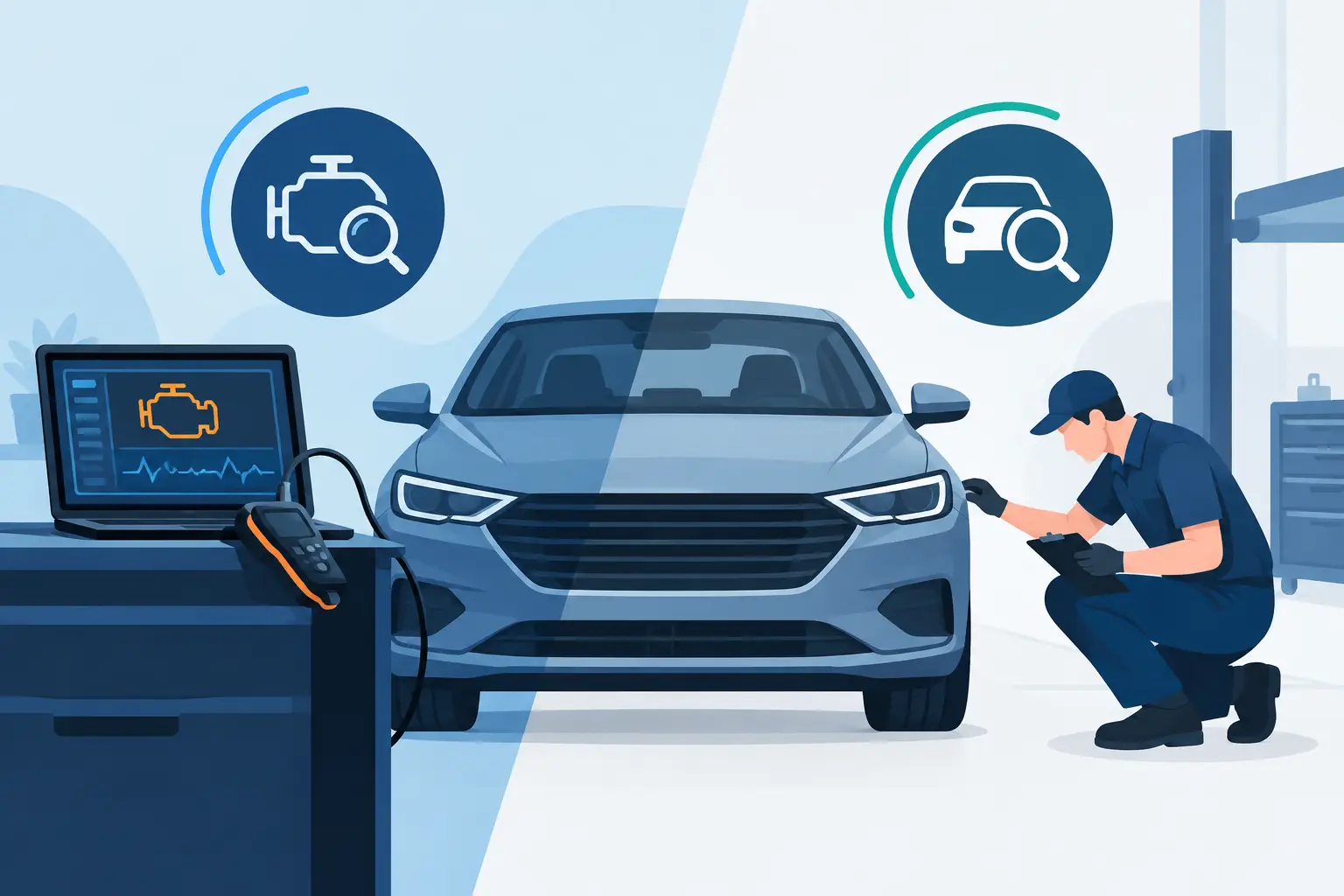
A warning light can make any drive feel uncertain, especially when you depend on your vehicle for work, family trips, or a daily commute. When comparing an engine scan vs inspection, the key difference is simple: a scan reads what your vehicle’s computer has detected, while an inspection looks at the vehicle itself. Both provide useful answers, but neither should automatically replace the other.
An honest diagnosis starts with understanding the concern, checking the evidence, and explaining what repairs are actually needed. That helps prevent unnecessary parts replacements and gives you a clearer picture of cost, urgency, and next steps.
What an Engine Scan Tells You
An engine scan connects a diagnostic tool to your vehicle’s onboard computer. Most modern vehicles store diagnostic trouble codes when the computer detects a fault in a monitored system. These codes may relate to the engine, emissions equipment, ignition system, fuel delivery, sensors, transmission, or other electronic components.
For example, a check engine light may trigger a code related to an oxygen sensor, a misfire, an evaporative emissions leak, or a catalytic converter efficiency concern. The scan tool can also show live operating data, such as engine temperature, sensor readings, fuel trim information, battery voltage, and misfire counts. This information gives a technician a useful starting point.
That starting point matters. A code does not always identify the failed part. A code for an oxygen sensor might be caused by the sensor itself, but it can also result from damaged wiring, an exhaust leak, an engine vacuum leak, or another issue affecting the sensor reading. Replacing parts based on codes alone can become expensive and may not solve the problem.
A professional engine scan should include more than reading a code and clearing the warning light. The technician should consider the code, vehicle history, symptoms, live data, and physical condition of related components before recommending a repair.
What a Vehicle Inspection Covers
A vehicle inspection is a hands-on assessment of visible, mechanical, and safety-related components. The exact scope depends on the reason for the visit, but it often includes checking fluid levels and leaks, belts and hoses, brakes, tires, steering and suspension parts, lights, battery condition, exhaust components, and signs of wear or damage.
Unlike a scan, an inspection can find problems that a vehicle computer may never detect. Worn brake pads, a leaking shock absorber, uneven tire wear, loose suspension components, corroded brake lines, and a damaged serpentine belt may not create a dashboard warning light. They can still affect safety, reliability, and repair costs.
Inspections are particularly valuable in Canada, where winter driving, road salt, potholes, and large temperature changes put extra stress on vehicles. Corrosion underneath the vehicle can develop gradually, while a pothole strike can affect a tire, wheel, alignment, or suspension component without immediately causing a warning light.
A thorough inspection also helps separate urgent repairs from maintenance that can be planned for later. Drivers deserve that distinction. A brake fluid leak or damaged tire needs prompt attention, while a filter replacement or minor seepage may be something to schedule during a future service visit.
Engine Scan vs Inspection: The Practical Difference
The easiest way to think about an engine scan vs inspection is that one checks digital evidence and the other checks physical evidence. An engine scan asks, “What has the vehicle computer noticed?” An inspection asks, “What condition are the vehicle’s systems actually in?”
A scan is especially helpful when the check engine light is on, the vehicle is running rough, fuel economy has dropped, the engine stalls, or there is an intermittent electronic issue. It can narrow down a problem quickly and help avoid guesswork.
An inspection is more useful when you hear a noise, feel vibration, notice a fluid spot on the driveway, experience poor braking, see uneven tire wear, or want to know whether a used vehicle is in good condition. It is also part of responsible routine maintenance, even if no warning lights are showing.
There is overlap. A technician diagnosing an engine concern may scan the computer and inspect ignition coils, spark plugs, vacuum lines, wiring, connectors, and fluid condition. The best service is often not choosing one method over the other. It is using the right combination for the symptom.
When an Engine Scan Is the Right First Step
If your check engine light appears, arrange for a scan as soon as practical. A steady light may indicate a concern that allows limited driving, but it still should not be ignored. A flashing check engine light can signal an active misfire that may damage the catalytic converter. In that situation, it is safer to stop driving and have the vehicle assessed promptly.
A scan is also a sensible first step if the vehicle has reduced power, poor fuel economy, hard starting, rough idling, or transmission warning messages. For fleet operators and commuters, finding the source of an electronic fault early can reduce downtime and prevent a smaller issue from becoming a roadside breakdown.
Keep in mind that clearing a warning light is not the same as fixing the issue. If the underlying fault remains, the light will usually return. The repair should address the cause, not just remove the message from the dashboard.
When You Need an Inspection Instead
Not every problem comes with a dashboard light. A scraping sound when braking, a clunk over bumps, a steering wheel vibration, a burning smell, or fluid under the vehicle calls for a physical inspection. Waiting for a warning light in these situations can create a larger repair or compromise safety.
You should also schedule an inspection before a long road trip, after hitting a serious pothole or curb, and when seasonal tire changes reveal uneven tread wear. Small signs can point to suspension wear, alignment issues, brake problems, or tire damage that is easier to correct early.
A pre-purchase inspection is another situation where a scan alone is not enough. A used vehicle may have no active warning lights and still have rust, oil leaks, worn brakes, damaged suspension parts, tire concerns, or evidence of poor previous repairs. The vehicle computer can provide useful information, but it cannot judge every part of the car.
Why a Scan and Inspection Often Belong Together
For many repairs, the most accurate answer comes from both services. Consider a vehicle with a check engine light and rough idle. The scan may show a cylinder misfire, but the inspection and testing determine whether the cause is a worn spark plug, failing ignition coil, fuel injector issue, vacuum leak, compression problem, or wiring fault.
The same applies to battery and charging concerns. A scan may reveal voltage-related codes, while direct battery testing and an inspection of terminals, cables, and the alternator provide the evidence needed for a proper repair.
This approach takes more care than simply replacing the part named in a code description. It also protects customers from paying for repairs that do not address the actual fault. At Niks Auto Repair, clear explanations and practical recommendations are part of helping drivers make informed decisions about their vehicles.
What to Tell Your Mechanic
The details you notice can make diagnosis faster and more accurate. Mention when the issue began, whether it happens only when the engine is cold or warm, how often it occurs, and whether there are noises, smells, leaks, or changes in performance. If a warning light flashes or appears after refuelling, rain, highway driving, or a recent repair, share that as well.
You do not need to diagnose the vehicle yourself. Your job is to describe what you are experiencing. A qualified technician can use that information, along with scan data and an inspection, to identify the right repair path.
If your vehicle is giving you a warning sign, trust it enough to have it checked. A timely scan, inspection, or both can replace uncertainty with a clear plan and help keep your next drive safe and dependable.