
Engine Diagnosis Case Study for a No-Start
Aug 11, 2026 · 5 min read
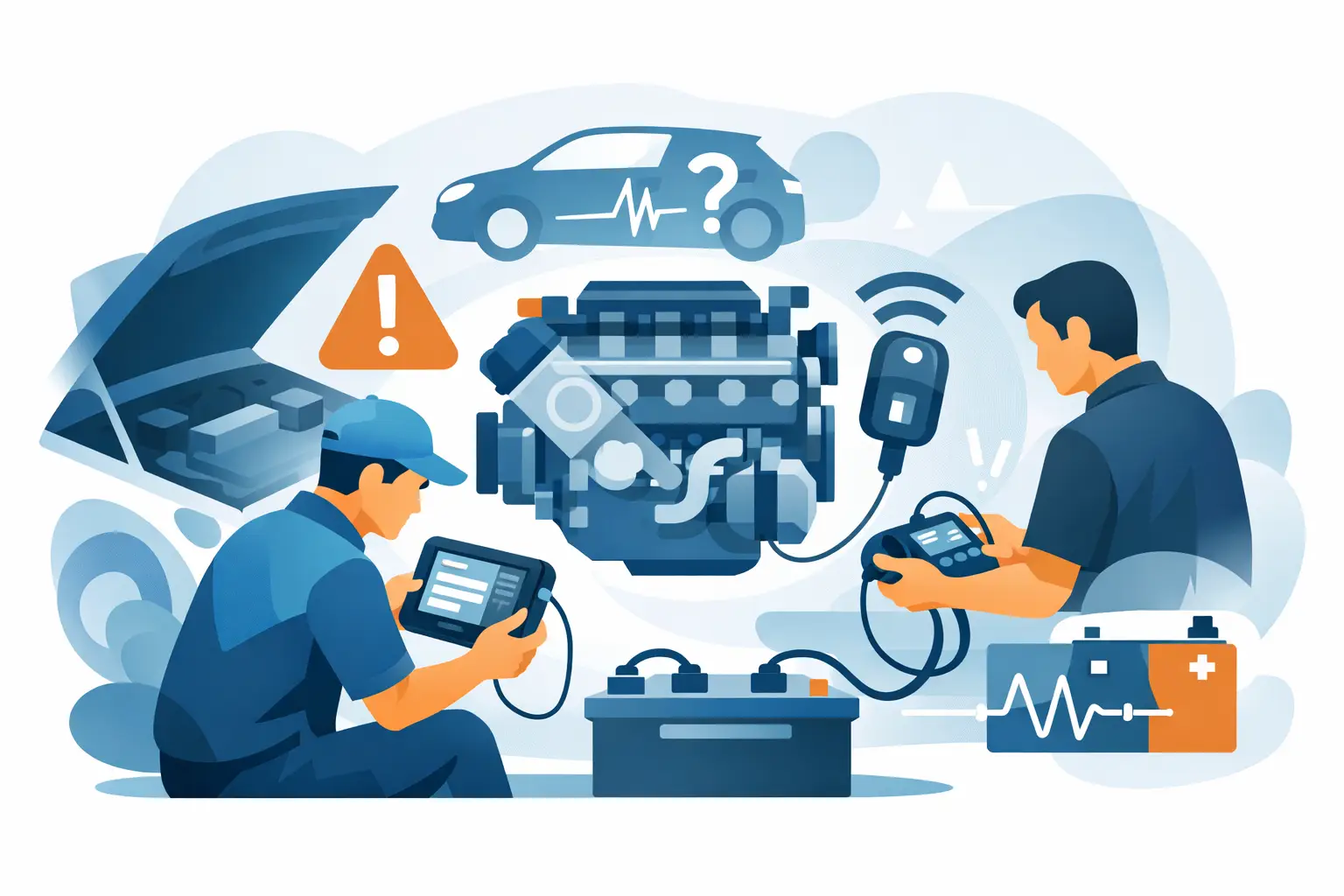
A no-start problem rarely happens at a convenient time. In this engine diagnosis case study, a commuter’s sedan would crank normally but refused to start on a cold weekday morning. The battery had recently been replaced, the dash lights worked, and there were no obvious warning signs before the failure. The owner’s first concern was understandable: “Does this mean I need a new engine?”
The answer was no. But getting to that answer required more than plugging in a scanner and replacing the first part that looked suspicious. It required a methodical inspection, clear communication, and testing each system before recommending repairs.
The customer concern: Cranks, but will not start
The vehicle arrived by tow after several unsuccessful attempts to start it. The engine turned over at a normal speed, which immediately helped narrow the concern. A slow or clicking crank often points toward a battery, connection, starter, or charging issue. In this case, the starter was doing its job. The engine simply was not firing.
For an engine to start, it needs the right combination of air, fuel, spark, compression, and accurate timing. A fault in any one of these areas can create the same symptom: an engine that cranks but does not run. That is why a no-start diagnosis should not begin with a guess.
The owner had already been advised elsewhere that the issue could be a fuel pump. A fuel pump was possible, but replacing it without proof could have meant a costly repair with no result. The first priority was to confirm what the engine was missing.
The engine diagnosis case study: Starting with the basics
A proper inspection began with the simple checks that are easy to overlook when everyone wants a fast answer. The battery voltage was tested under load, and the terminals and main ground connections were inspected. Although the battery was relatively new, a new battery does not rule out a loose terminal, corroded connection, or voltage drop.
The battery and connections tested well. Next, the technician checked the vehicle’s scan data for stored fault codes and live readings while cranking. There was no single code that identified the failed part, but the data showed an inconsistent engine speed signal during cranking.
That detail mattered. The engine control module needs to know the crankshaft’s position and speed before it can correctly control ignition and fuel injection. If the crankshaft position signal drops out, the vehicle may crank strongly but never start. It can also stall unexpectedly, start only after cooling down, or run intermittently before failing completely.
Before replacing a sensor, however, the wiring and related circuits needed to be checked. A damaged connector, broken wire, oil contamination, or poor ground can imitate a failed sensor. Testing confirmed that power and ground were present where required, while the crankshaft position sensor signal itself was unreliable.
The fault had been identified: a failing crankshaft position sensor was preventing the engine computer from receiving dependable timing information.
Why testing mattered more than assumptions
A no-start condition can feel urgent, especially when a vehicle is needed for work, school drop-offs, appointments, or family responsibilities. That urgency can make a quick parts replacement sound appealing. But a quick guess is not always a quick fix.
Had the fuel pump been replaced first, the customer could have paid for an expensive part and the related labour while the original problem remained. The same is true of spark plugs, ignition coils, batteries, and starters. These parts can cause starting problems in certain situations, but they should be replaced because testing supports the repair, not because they are common suspects.
This is also where an honest explanation makes a real difference. The customer was told what had been tested, what the results meant, and why the crankshaft sensor was the recommended repair. They were also advised that the sensor connector and wiring had been inspected, so the estimate addressed the actual fault rather than a broad list of possibilities.
Clear communication gives vehicle owners the information they need to approve work confidently. It also helps avoid the frustration of hearing that more parts are needed after an initial repair did not solve the problem.
The repair and verification process
Once approval was received, the faulty sensor was replaced and the connector was secured. The repair did not end there. The vehicle was started multiple times, allowed to reach operating temperature, and checked again after sitting briefly. Live engine data was monitored to confirm the crankshaft speed signal remained stable.
The engine started immediately each time. No warning lights returned, and no related fault codes reset during the verification process. A short road test confirmed normal acceleration, idle quality, and engine operation.
The final invoice reflected the confirmed repair rather than a list of unneeded components. For the owner, that meant less downtime, a lower repair cost than a fuel-system replacement, and reassurance that the no-start issue had been properly addressed.
What drivers can learn from this case
The main lesson is not that every no-start vehicle has a failed crankshaft sensor. It does not. A similar symptom could come from a weak fuel pump, a blown fuse, damaged wiring, an ignition issue, a security system fault, a timing concern, or even internal engine damage in more serious cases.
The lesson is that symptoms alone do not tell the full story. “It will not start” is a starting point for diagnosis, not a diagnosis itself.
There are a few details that can help your mechanic work more efficiently. If your vehicle has been difficult to start, pay attention to whether the concern happens when the engine is cold, warm, wet, or after a long drive. Note whether it cranks slowly, cranks normally, clicks once, starts and stalls, or fails without warning. Let the technician know about recent repairs, warning lights, unusual smells, reduced power, or stalling incidents.
These observations do not replace professional testing, but they can point the inspection in the right direction and reduce unnecessary time in the shop.
When a no-start problem needs immediate attention
If a vehicle suddenly will not start, avoid repeated long cranking attempts. They can drain the battery, overheat the starter, and make the original issue harder to assess. If you smell fuel, see smoke, notice damaged wiring, or the vehicle stalled in traffic, arrange for professional assistance rather than continuing to try to start it.
A breakdown is stressful, but the right response is not always the most expensive one. In many cases, a careful engine diagnosis can identify a repairable electrical, sensor, fuel, or ignition fault before it turns into wasted spending and lost time.
At Niks Auto Repair, the goal is to give drivers a clear answer before work begins, explain the repair in plain language, and help get them safely back on the road. If your vehicle is cranking without starting, book an inspection before replacing parts based on a guess. A reliable diagnosis is often the fastest route back to a dependable vehicle.