
Can Worn Suspension Damage Tires? Yes, Here's How
Sep 14, 2026 · 6 min read
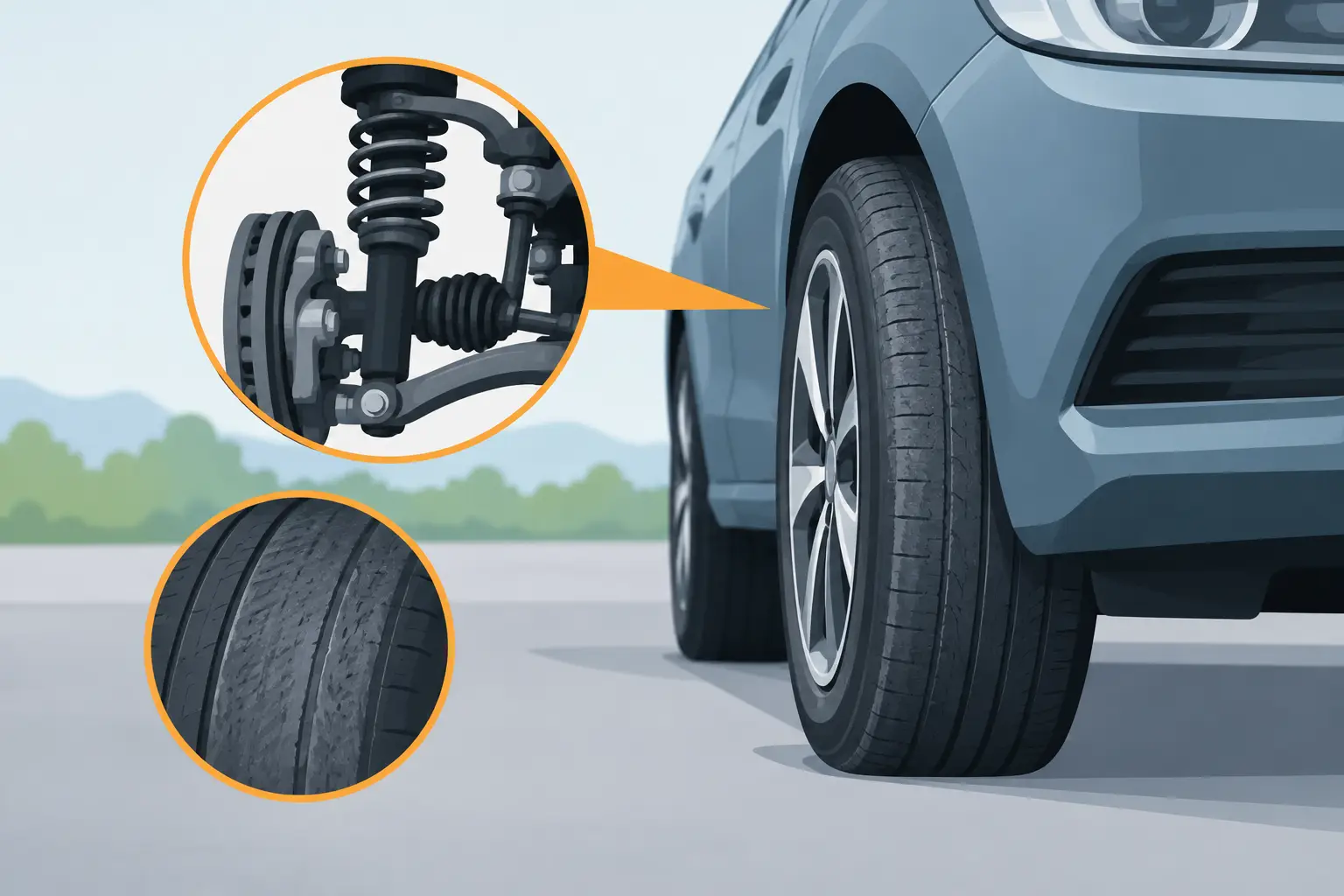
A tire that wears out months before it should is more than an expensive inconvenience. It can reduce wet-road grip, make your vehicle harder to control, and leave you replacing tires before you expected. So, can worn suspension damage tires? Yes. Worn suspension components can change how the tire meets the road, allowing uneven wear to develop quickly and reducing the value you get from every set of tires.
The good news is that unusual tire wear often gives drivers an early warning. A clear inspection can identify whether the issue is suspension-related, an alignment problem, incorrect tire pressure, or a combination of factors. Addressing the cause early is usually far more affordable than continuing to wear through tires.
How worn suspension damages tires
Your suspension does more than make bumps feel less harsh. Shocks, struts, springs, control arms, ball joints, bushings, and related components help keep each tire firmly and consistently in contact with the road. When those parts are in good condition, the load is spread properly across the tread.
As components wear, that control starts to disappear. A weak shock or strut can allow the wheel to bounce after hitting a pothole or rough patch. Worn bushings and ball joints can create excess movement in the wheel assembly. Sagging springs may alter ride height and alignment angles. Each condition can make one area of the tire carry more load than it should.
The tire is not usually damaged by the worn part itself. It is damaged by the way that worn part changes vehicle movement, wheel position, and road contact. Over thousands of kilometres, that small change can create a visible wear pattern and shorten tire life significantly.
Suspension wear and wheel alignment often overlap
Suspension problems and wheel alignment problems are closely connected, but they are not exactly the same. Wheel alignment refers to the angles at which your tires point and sit on the road. If those angles are outside specification, tires can scrub against the pavement rather than roll smoothly.
A vehicle can need an alignment after a pothole impact, curb strike, or normal wear. However, an alignment alone may not solve the problem if suspension components are loose or damaged. For example, a technician may set the alignment correctly in the shop, but a worn ball joint or control arm bushing can allow the wheel angle to shift again while driving.
This is why a proper inspection matters. Paying for repeated alignments without finding the underlying worn component can become frustrating and costly. The right repair order is generally to correct the worn or damaged parts first, then perform an alignment when needed.
Tire wear patterns that can point to suspension trouble
The way a tire wears can provide useful clues. It does not provide a final diagnosis by itself, because tire pressure, rotation intervals, driving habits, and alignment all affect tread life. Still, certain patterns deserve attention.
- Cupping or scalloping: The tread has uneven dips or high-and-low patches around the tire. This is commonly associated with weak shocks or struts that allow excessive bouncing.
- Inside or outside edge wear: One shoulder of the tire is wearing faster than the rest. An alignment issue is likely, but worn suspension parts may be the reason the alignment cannot stay correct.
- Feathering: The tread blocks feel sharp in one direction and smooth in the other. This often indicates the tire is being dragged slightly sideways because of incorrect toe alignment.
- Wear on both outer edges: This is more often caused by underinflation than suspension damage, though it can occur alongside other issues.
Pay attention to changes in ride quality as well. A vehicle that dips heavily when braking, feels unstable over uneven pavement, wanders on the highway, clunks over bumps, or continues bouncing after a dip may have suspension wear that needs professional attention.
Why Canadian roads can make the problem worse
Winter conditions and rough road surfaces are hard on suspension systems. Potholes, frost heaves, road construction, gravel, and curb impacts can all speed up wear or cause sudden damage. A hard impact may bend a component, affect alignment, or damage a tire internally even if the sidewall looks normal at first glance.
That does not mean every vibration or uneven tire means a major repair is required. Tires can also wear unevenly from low pressure, missed rotations, a bent wheel, or a wheel balance issue. But when uneven wear appears along with steering pull, noise, bouncing, or instability, the suspension should be checked rather than guessed at.
For drivers who commute long distances, carry tools or equipment, tow occasionally, or operate a small fleet, the cost can add up quickly. Extra weight puts greater demand on tires and suspension parts. Regular inspections help prevent a small amount of looseness from becoming a tire replacement, alignment, and suspension repair all at once.
What happens if you keep driving on worn suspension
Some suspension wear develops slowly, which can make it easy to put off. The vehicle may still start, stop, and get you where you need to go. But continued driving can turn a manageable repair into a larger bill.
Unevenly worn tires may become noisy and lose traction in rain, slush, and snow. Cupped tires can create a humming sound that remains even after new suspension parts are installed, because the tire damage is already permanent. If tread depth becomes uneven enough, replacing the tires may be necessary even when there appears to be usable tread elsewhere on the tire.
Worn suspension can also affect braking stability and steering response. During an emergency stop or a sudden lane change, a vehicle with excessive body movement may feel less predictable. That is especially concerning when roads are wet, icy, or covered in loose material.
There is also a financial trade-off. Replacing shocks, struts, bushings, or ball joints at the right time costs money, but ignoring them can lead to premature tire replacement and additional alignment work. A professional inspection helps separate urgent safety concerns from normal wear that can be monitored, so you can make an informed decision without unnecessary repairs.
What to do when you notice uneven tire wear
Start with a visual check when you wash the vehicle or check tire pressure. Look across the entire tread, including the inside edge that is easy to miss. Run your hand gently over the tread surface with the vehicle parked and cool. If it feels wavy, choppy, or noticeably sharp in one direction, arrange an inspection.
Keep tire pressure at the specification shown on the driver-side door placard, not the maximum pressure printed on the tire sidewall. Rotate tires according to your vehicle manufacturer's recommendation, or sooner if a technician advises it based on the tire type and wear pattern. These basic steps protect tire life, but they cannot correct a failing shock, loose steering component, or damaged suspension part.
A qualified technician should inspect the tires, suspension, steering components, wheel bearings, and alignment angles together. This approach avoids replacing parts based only on a symptom. If a tire is badly worn or structurally damaged, it may need replacement before an alignment can be accurately completed.
Protect your tires before the next season
Have the suspension and tire condition checked after a major pothole strike, before a long road trip, or whenever your vehicle starts handling differently. Seasonal tire changes are also a practical opportunity to inspect tread wear closely, since the tires are already off the vehicle.
At Niks Auto Repair, the goal is to give you clear answers about what is worn, what is urgent, and what can reasonably wait. Looking after suspension concerns early helps your tires last longer and gives you more confidence every time the road conditions turn rough.