
Cabin Filter Replacement Signs You Shouldn't Ignore
Sep 16, 2026 · 6 min read
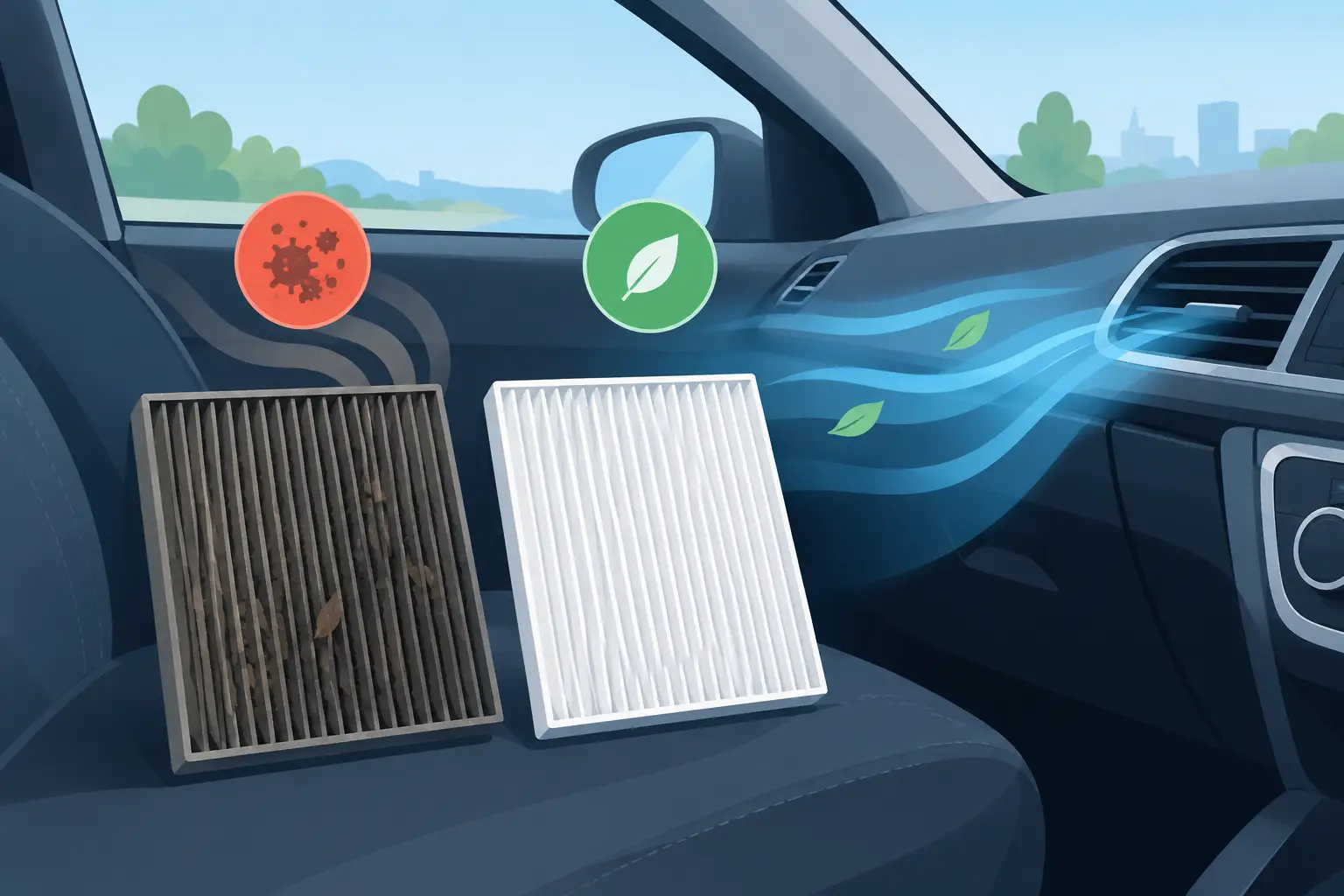
When the heat first comes on after a damp Canadian fall, many drivers notice it right away: a musty smell, weak airflow, or dust coming through the vents. A cabin filter replacement is a small maintenance service, but it can make a real difference to the air you breathe and the comfort of every trip.
Your cabin air filter works quietly behind the dashboard, trapping dust, pollen, road grime, leaves, and other airborne debris before they enter the passenger compartment. When it becomes clogged, your vehicle may still run perfectly well, but the heating and air conditioning system has to work harder to move air through the vents. That is a problem worth dealing with before it turns into an unpleasant drive or a more involved HVAC repair.
Cabin Filter Replacement: Know the Warning Signs
A dirty cabin filter does not always trigger a dashboard warning light, so the signs are usually noticed during normal driving. Reduced airflow is one of the clearest indicators. If the fan is running at a familiar setting but the air coming from the vents feels weak, the filter may be restricting circulation.
Persistent odours are another common clue. A filter that has collected moisture, leaves, and road debris can develop a damp or musty smell, especially when you first turn on the heater or air conditioner. A new filter may help, but odours can also come from debris around the cowl intake or mould within the HVAC system. A professional inspection helps identify the actual source rather than replacing parts unnecessarily.
More dust inside the vehicle, worsening allergy symptoms, and windows that take longer to clear can also point to a restricted filter. These symptoms do not guarantee that the filter is the only issue, but they are good reasons to have it checked during routine maintenance.
What a Cabin Air Filter Actually Protects
The cabin filter is often confused with the engine air filter. They do different jobs. The engine air filter protects the engine by cleaning the air used for combustion. The cabin filter is there for the people inside the vehicle.
Depending on the filter type, it can capture larger debris such as dust and pollen, while higher-quality filters may also reduce finer particles and some traffic-related odours. Activated carbon filters are a popular option for drivers who spend a lot of time commuting in busy traffic or who are sensitive to smells from exhaust, smoke, and road chemicals.
There is a trade-off. Premium filters can cost more than standard paper filters, and not every vehicle needs the most expensive option. The right choice depends on your driving conditions, your vehicle's design, and whether allergies or odours are a regular concern. A trustworthy technician should explain the options clearly and let you decide.
How Often Should You Replace It?
There is no single replacement interval that fits every vehicle. Many manufacturers recommend checking the cabin filter at regular service intervals and replacing it roughly every 15,000 to 30,000 kilometres. However, Canadian driving conditions can shorten its useful life.
City commuting, gravel roads, construction zones, wildfire smoke, heavy pollen seasons, and frequent use of the defroster can all load a filter faster. Vehicles parked outside under trees may also collect leaves and organic debris around the fresh-air intake. If you drive mainly on clean highways and use the ventilation system lightly, the filter may last longer.
The practical approach is simple: have the filter inspected during an oil change, seasonal maintenance appointment, or pre-winter check. Seeing the old filter gives you a straightforward answer. If it is reasonably clean, there is no reason to replace it early. If it is dark, blocked, wet, or full of debris, replacement is sensible preventive maintenance.
Why Winter Makes This Service More Noticeable
In Canada, clear windows are a safety issue. Your defroster relies on steady airflow to move warm, dry air across the windshield. A clogged cabin filter can reduce that airflow and make it harder to clear fog or frost from inside the glass.
It will not usually cause a complete defroster failure on its own. Low coolant, a faulty blower motor, HVAC door problems, or an air conditioning fault can also affect defrost performance. Still, a restricted filter is one of the simplest issues to rule out, and it is often overlooked until drivers are dealing with poor visibility on a cold morning.
Summer brings a different version of the same issue. When the air conditioner has to push air through a blocked filter, airflow can feel disappointing even when the system is producing cold air. Replacing the filter can restore normal circulation, although it will not fix a low refrigerant level or a mechanical air conditioning problem.
Can You Replace a Cabin Filter Yourself?
On some vehicles, the cabin filter sits behind the glove box and can be replaced with basic tools in a few minutes. On others, access is much less convenient. The filter may be behind trim panels, under the dash, or installed in a location where clips and components can be damaged if handled carelessly.
A do-it-yourself replacement can be a reasonable option if you have the correct filter, know its orientation, and can access it without forcing parts. The direction of airflow matters. Installing the filter backward may reduce its effectiveness or create noise, and a poorly fitted cover can allow unfiltered air to bypass the filter altogether.
Professional service is a better choice when access is difficult, the vehicle has a persistent smell, or the ventilation system is not performing normally. It also provides a chance to inspect the filter housing, fresh-air intake, blower area, and visible drainage points for leaves or moisture. That extra check is often what separates a quick parts swap from a useful maintenance service.
What to Expect From an Honest Service Visit
Cabin filter replacement should be clear and straightforward. A professional shop should tell you whether the existing filter is actually dirty, show you the condition when practical, and explain whether a standard or carbon filter is appropriate for your vehicle.
The cost depends on the vehicle, filter quality, and how much labour is needed to access the housing. Some filters are inexpensive and easy to fit; others require more disassembly. The key is receiving a clear estimate before work begins, with no pressure to approve unrelated repairs.
If the filter is clean but you are still dealing with weak airflow or odours, further diagnosis may be needed. A good technician will not claim that a new filter will solve every HVAC complaint. They will inspect the system, explain the likely cause, and recommend only the work that makes sense.
Do Not Ignore Water, Debris, or Recurring Smells
One dirty filter is normal. A repeatedly wet filter, frequent leaf buildup, or a strong smell that returns shortly after replacement deserves more attention. Water may be entering through a blocked drainage area, a damaged seal, or another issue near the HVAC intake. Organic debris can also create conditions where bacteria and mould grow.
Addressing the underlying cause helps protect the blower motor and keeps the new filter from becoming contaminated too quickly. It is especially worthwhile for families, rideshare drivers, fleet vehicles, and anyone who spends long hours on the road.
A clean cabin filter will not change the way your engine runs, but it can make the vehicle feel better cared for every time you turn on the fan. If your vents smell stale, airflow has dropped, or you cannot remember the last time it was checked, ask for a cabin filter inspection at your next visit. Niks Auto Repair can provide a clear recommendation, competitive pricing, and professional service without the guesswork.