Brake System Inspection Guide for Drivers
May 5, 2026 · 7 min read
That soft brake pedal on your morning commute is not something to wait on. If your vehicle takes longer to stop, pulls to one side, or makes a grinding noise at the lights, a proper brake system inspection guide can help you understand what matters, what can wait, and what needs attention now.
For most drivers, brakes are easy to forget until something feels wrong. The problem is that brake issues often build gradually. A small vibration can turn into rotor damage. A worn pad can become metal-on-metal contact. A minor fluid leak can affect stopping power when you need it most, especially in Canadian driving conditions where wet roads, snow, salt, and temperature swings all put extra strain on braking components.
Why a brake system inspection guide matters
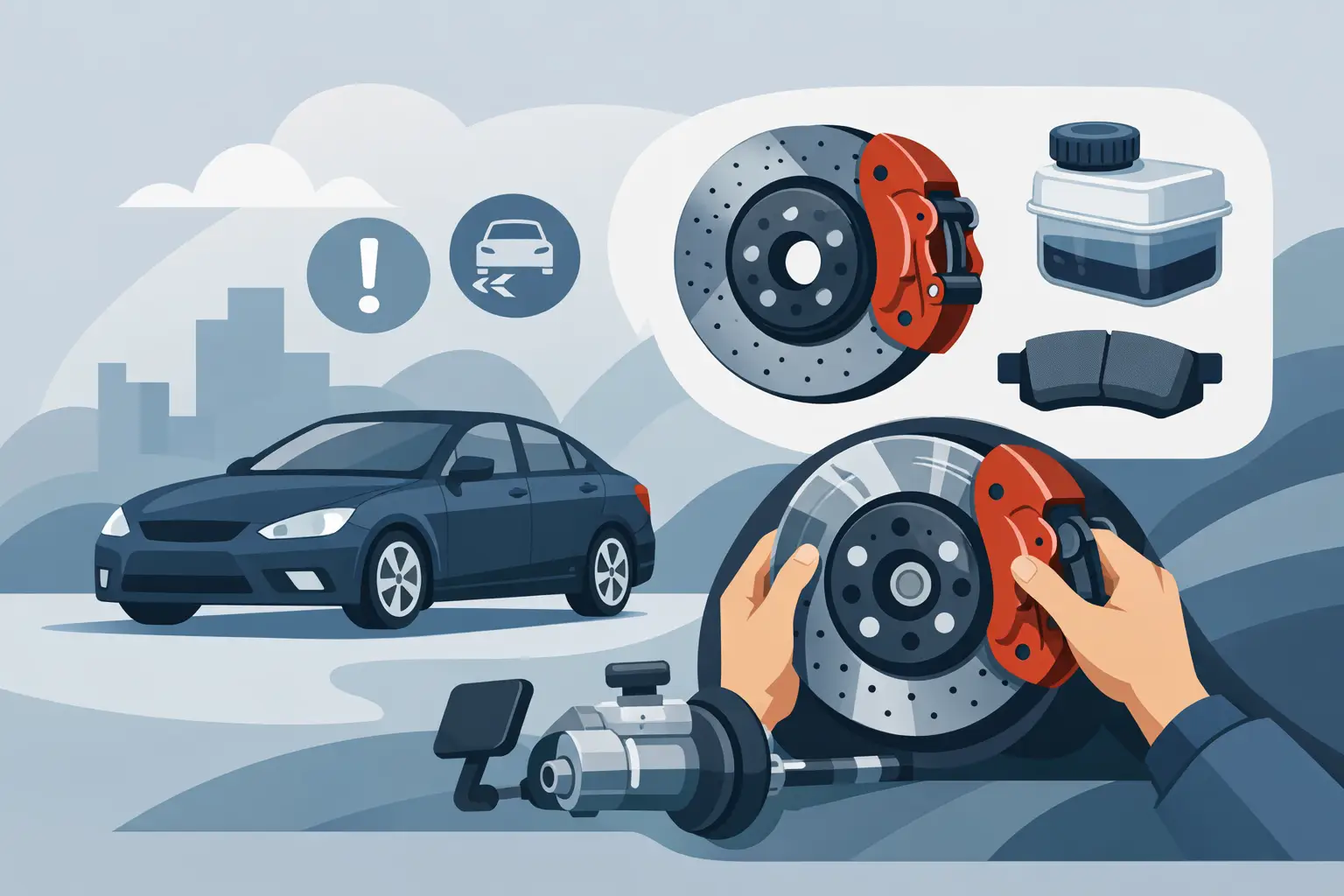
Your braking system is not just one part. It is a group of components working together every time you slow down or stop. Brake pads, rotors, calipers, brake lines, fluid, hoses, hardware, and in many vehicles the parking brake system all need to perform properly. If one part wears unevenly or begins to fail, it can affect the rest of the system.
That is why inspections matter more than guesswork. Some brake problems are obvious, like squealing or grinding. Others are easier to miss, such as a sticking caliper, moisture-contaminated brake fluid, or uneven pad wear. Catching those issues early usually means a simpler repair, lower cost, and less risk on the road.
What a proper brake system inspection includes
A real brake inspection should go beyond a quick glance through the wheel. A technician should assess both visible wear and how the system is operating under load. That means checking pad thickness, rotor condition, caliper movement, brake fluid condition, hose and line integrity, and brake response.
Brake pads and shoe wear
Pads are one of the first wear items to inspect. If they are too thin, stopping distances can increase and rotor damage becomes more likely. Uneven wear can also point to other problems, such as seized slide pins, caliper issues, or hardware that is no longer moving freely.
On some vehicles, rear drum brakes may still be used. In that case, brake shoe wear, drum condition, and related hardware should be inspected as well.
Rotor condition and surface damage
Rotors need to be checked for thickness, scoring, heat spots, and warping. A vibration while braking may suggest rotor issues, but not always. Sometimes the cause is uneven pad material transfer or suspension wear. That is why inspection matters - the symptom can feel similar, but the repair may be different.
If rotors are too thin or damaged, machining may not be the right choice. In many cases, replacement is the safer and more reliable option.
Calipers, hardware, and movement
A brake pad can only work properly if the caliper and hardware allow even pressure and release. A sticking caliper can cause one pad to wear out faster than the other, create heat, and make the vehicle pull during braking. Rust, corrosion, and lack of lubrication can all interfere with proper movement, especially after a Canadian winter.
Small hardware parts matter more than many drivers realize. Anti-rattle clips, shims, and slide pins are not optional extras. When they wear out or seize up, noise and uneven braking often follow.
Brake fluid and hydraulic components
Brake fluid does not last forever. Over time, it can absorb moisture, which lowers its boiling point and can reduce braking performance. In cold climates and stop-and-go driving, that extra moisture can contribute to corrosion inside the system too.
A thorough inspection should also include checking lines, hoses, fittings, and the master cylinder area for leaks or signs of deterioration. Even a slow leak is a serious safety concern.
Parking brake function
The parking brake should hold the vehicle securely and release properly. If it is too loose, partially seized, or not engaging evenly, it can create both safety and wear issues. For drivers who mostly park on level ground, this problem can go unnoticed for a long time.
Signs your brakes need attention
Some warning signs are immediate. Others are easy to explain away until the problem gets worse. If you notice squealing, grinding, vibration, a soft pedal, increased stopping distance, or a vehicle that pulls during braking, it is time to book an inspection.
A brake warning light also deserves prompt attention. In some cases it points to low fluid, worn components, or an issue with the hydraulic system. If the pedal suddenly feels very low or braking power drops sharply, the safest move is to stop driving and have the vehicle assessed as soon as possible.
There is also the less obvious category - the vehicle still stops, but it no longer feels right. That matters. A change in feel is often the first clue that wear or imbalance is starting.
How often brakes should be inspected
There is no single answer that fits every vehicle. Driving habits, road conditions, vehicle size, and load all affect brake wear. A family SUV used in city traffic will not wear brakes the same way as a light sedan driven mostly on the highway. A work vehicle carrying tools or equipment may need more frequent checks.
As a practical rule, brakes should be inspected at least once a year or whenever tires are rotated, seasonal maintenance is done, or a warning sign appears. If you drive regularly in heavy traffic, tow, or deal with steep roads, more frequent inspections make sense.
Canadian winters also change the picture. Salt and moisture can speed up corrosion on brake hardware and lines, so an inspection after winter is often a smart preventive step.
What drivers can check themselves
You do not need to be a mechanic to notice basic warning signs. You can pay attention to how the pedal feels, listen for unusual noise, and watch for changes in stopping distance. You may also be able to see pad wear through some wheels, although visibility varies by vehicle.
What you should not do is rely on a visual check alone to decide everything is fine. Many brake issues are hidden until components are removed and measured properly. A quick look can miss uneven wear, internal fluid problems, or hardware that is binding under use.
Why cheap brake work can cost more later
Brake service is one area where the lowest quote is not always the best value. Some shops price a basic pad replacement without addressing rotors, hardware, lubrication points, or fluid condition. That can leave the underlying issue untouched and lead to noise, uneven wear, or repeat repairs sooner than expected.
Quality brake work means looking at the full system, explaining what is worn and why, and recommending only what the vehicle actually needs. Sometimes that means a straightforward pad and rotor service. Other times it may include caliper replacement, fluid service, or brake line repair. It depends on the condition of the system, not a one-size-fits-all package.
That is where honest advice matters. Drivers want to know what is urgent, what is preventive, and what can reasonably wait a little longer without compromising safety.
Choosing a shop for a brake system inspection guide you can trust
A good inspection should leave you with clear answers, not more confusion. You should understand the condition of your brakes, the reason for any recommended repair, and the expected cost before work begins. If a shop cannot explain the issue in plain language, it is harder to feel confident in the repair.
Look for service that is transparent and practical. That means a technician who checks the full system, identifies safety concerns properly, and gives you realistic advice based on how you actually use your vehicle. For many Canadian drivers, that kind of straightforward support is just as important as the repair itself.
At Niks Auto Repair, that approach is simple: inspect carefully, explain clearly, and recommend what protects your safety and your budget.
When to book right away
If your brakes are grinding, the pedal feels soft or spongy, the vehicle pulls sharply while stopping, or a warning light comes on, do not put it off. Those are not small annoyances. They are signs the system may not respond the way it should in an emergency.
Even if the issue seems minor, brake problems rarely improve on their own. The earlier they are checked, the more options you usually have for keeping the repair manageable.
Your vehicle should stop straight, smoothly, and without drama every time you press the pedal. If it does not, trust what you are feeling and get it looked at. A timely inspection is one of the simplest ways to protect your safety, avoid bigger repairs, and keep your day moving without unwanted surprises.