
Brake Repair Before and After for Safer Driving
Aug 27, 2026 · 6 min read
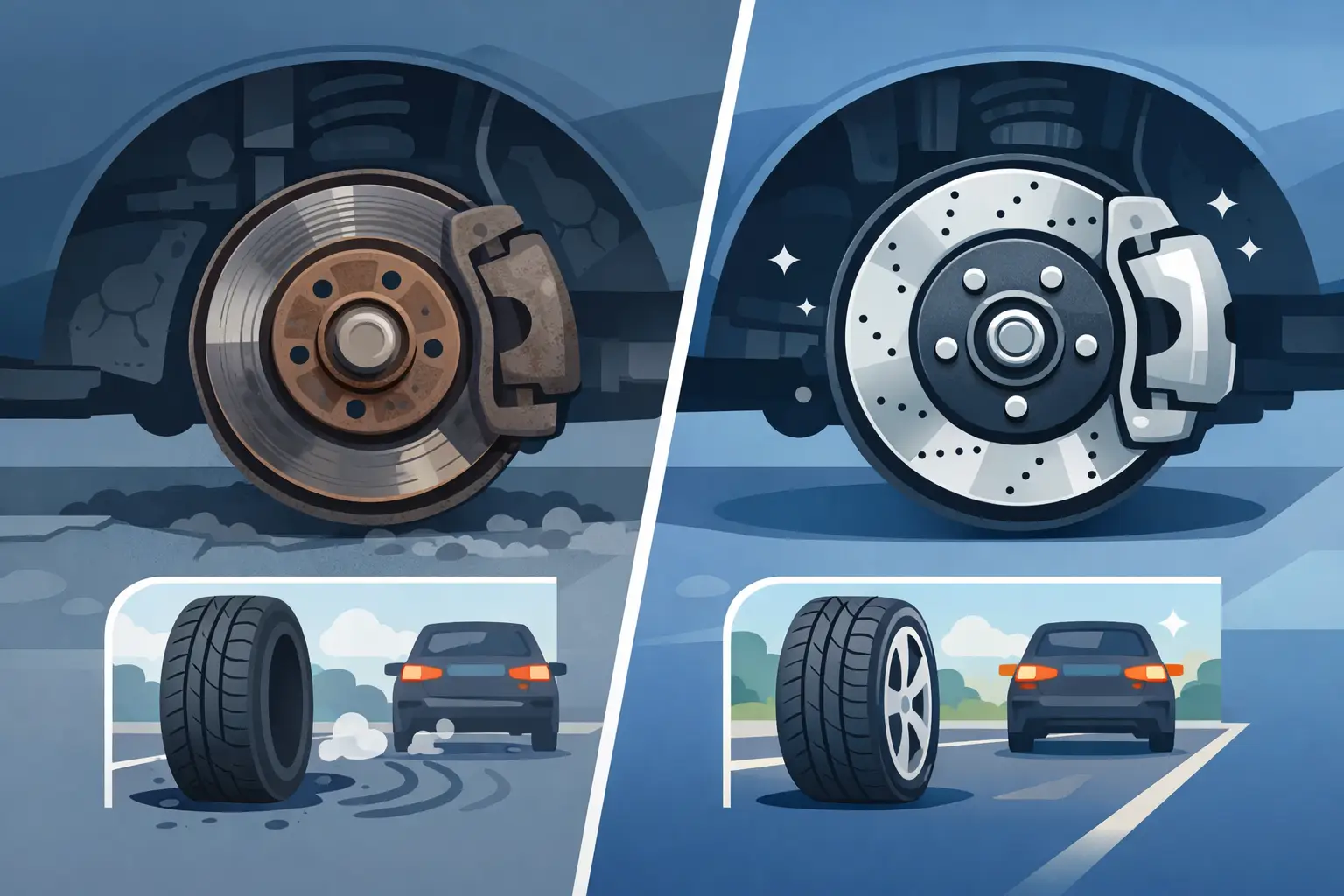
A brake pedal that feels soft at a red light, a steering wheel that shakes on the highway, or a grinding sound in a parking lot can change how you feel about every trip. Brake repair before and after is not only about replacing worn parts you can see. It is about restoring predictable stopping power, a firm and controlled pedal feel, and the confidence to drive through Canadian traffic and changing weather safely.
What Brake Repair Before and After Should Feel Like
Before a proper brake repair, drivers often notice small changes that become harder to ignore. The vehicle may take longer to stop, pull to one side, vibrate during braking, or make squealing and scraping sounds. Sometimes there is no noise at all - only a pedal that feels different from what you are used to.
After the right repair, braking should feel controlled and consistent. The vehicle should stop in a straight line under normal conditions, without steering wheel shake, metallic grinding, or an unexpected pedal drop. A quality repair also helps prevent uneven wear that can lead to larger, more expensive work later.
The visible difference can be clear when pads are worn thin or rotors are heavily scored. However, the most meaningful change is how the system performs. New-looking parts alone do not guarantee a safe brake job. The full system needs to be inspected, fitted correctly, and tested.
Signs It Is Time to Have Your Brakes Checked
Brakes do not always fail without warning. In many cases, your vehicle gives you time to address a concern before it becomes an urgent repair. Booking an inspection early can protect your safety and may reduce the number of parts that need replacement.
Watch for these common warning signs:
- A squealing, grinding, scraping, or clicking sound when applying the brakes
- A brake pedal that feels soft, spongy, unusually hard, or travels farther than normal
- Pulling left or right while braking, especially on a level road
- Vibration through the brake pedal or steering wheel during stops
- A burning smell, reduced braking response, or a brake warning light
A brief squeal after rain, snow, or an overnight temperature change is not always a serious problem. Surface rust can form on brake rotors, particularly during a Canadian winter, and often clears after a few normal stops. Persistent noise, vibration, or reduced stopping performance deserves professional attention.
What Happens During a Professional Brake Inspection
A trustworthy repair starts with finding the actual cause. Replacing brake pads without checking the rest of the system can leave a driver with the same noise, uneven braking, or premature wear shortly afterward.
A professional inspection normally includes checking brake pad thickness, rotor condition, calipers, brake hoses, fluid level, hardware, and signs of leaks or uneven wear. The technician should also consider your concern: when the noise happens, whether the vehicle pulls under braking, and whether the issue began after a recent repair or seasonal tire change.
For example, a pulsating brake pedal may point to rotor runout or uneven rotor wear, but the underlying cause can also involve seized caliper hardware, wheel installation issues, or suspension components. A grinding noise may mean the friction material is worn away, yet it can also be caused by a loose shield or damaged hardware. Clear diagnosis matters because the correct repair depends on what is actually found.
At Niks Auto Repair, the goal is to explain the condition of the brakes clearly before work begins. You should understand which components need attention now, what can be monitored, and why the recommended repair is necessary. That is how drivers can make informed decisions without pressure or confusion.
Pads, Rotors, Calipers, and Fluid Do Different Jobs
Brake pads create the friction that slows the vehicle. Rotors provide the surface the pads clamp against. When pads wear low, they can damage the rotors, increasing the repair required. In many cases, pads and rotors are replaced together to provide an even braking surface and dependable performance.
Calipers apply pressure to the pads. A sticking or seized caliper can cause one pad to wear much faster than the other, create heat, and make the vehicle pull while braking. Brake fluid transfers pedal pressure through the system. If the fluid is contaminated, low, or leaking, pedal feel and braking response can be affected.
Not every repair requires every component. A careful inspection separates necessary work from parts that are still serviceable. That approach supports both safety and competitive pricing.
Before and After Brake Repair: What May Be Replaced
The right repair can range from a straightforward pad replacement to a more involved service involving rotors, calipers, or hydraulic components. The condition of the vehicle determines the scope of work.
If pads have worn evenly and the rotors meet the manufacturer’s specifications, a technician may recommend replacing pads and servicing the hardware. If rotors are deeply grooved, rusted beyond a safe usable surface, warped, or below the minimum thickness, replacement is often the more dependable option. Resurfacing can be suitable in some situations, but it depends on rotor thickness and condition. It is not automatically the best value.
Brake hardware, such as clips and slide pins, also deserves attention. These smaller parts help pads move properly and can contribute to noise or uneven wear when corroded. Road salt, moisture, and stop-and-go commuting can be particularly hard on these components.
After the repair, the technician should verify brake operation and road-test the vehicle where appropriate. Drivers should leave knowing what was completed and what normal bedding-in feels like for new brake components.
Why the Cheapest Brake Job Can Cost More Later
Brake repair pricing depends on the vehicle, parts required, axle being serviced, and the condition of related components. A compact car with standard brake components is different from a truck, SUV, hybrid, performance vehicle, or work van. Some vehicles use electronic parking brake systems or specialized parts that require additional procedures.
The lowest quote may not include rotors, hardware, fluid service, taxes, or diagnosis. It may also rely on parts that wear quickly or create excess noise and dust. That does not mean the most expensive option is always necessary. It means the estimate should be clear enough for you to compare what is included.
Ask whether the price covers parts, labour, hardware, rotor replacement or machining if required, and any additional issue found during inspection. Honest service means discussing those details before the work moves ahead whenever possible.
How to Look After Your Brakes After Service
New pads and rotors may need a short break-in period. During the first several drives, avoid repeated hard stops unless traffic conditions require them. Give yourself extra following distance and allow the brakes to cool between heavier applications, especially after a repair involving new friction components.
A faint smell or light noise during the initial bedding-in process can occur, but it should not continue for long or become severe. Contact the repair shop if you notice grinding, strong burning odours, smoke, a warning light, pulling, or a pedal that feels unsafe after service.
Regular maintenance also helps. Have your brakes checked during seasonal tire changes, routine oil service, or before a long road trip. This is especially worthwhile if you drive in heavy traffic, tow loads, travel on steep grades, or deal with frequent winter road salt.
When a Brake Concern Cannot Wait
Do not continue driving if the brake pedal drops to the floor, the vehicle has very little stopping power, a brake warning light stays on, or you smell burning accompanied by heat near a wheel. Pull over safely and arrange professional assistance. Continuing to drive can put you, your passengers, and other road users at risk.
For less urgent concerns, do not wait for a squeal to turn into grinding. Brakes are one of the few vehicle systems you rely on every time you move, and a clear inspection can replace uncertainty with a practical plan. If your vehicle no longer stops, sounds, or feels the way it should, having it checked now is a sensible step toward safer driving tomorrow.