
Brake Failure Repair Example: What Happens Next
Oct 4, 2026 · 6 min read
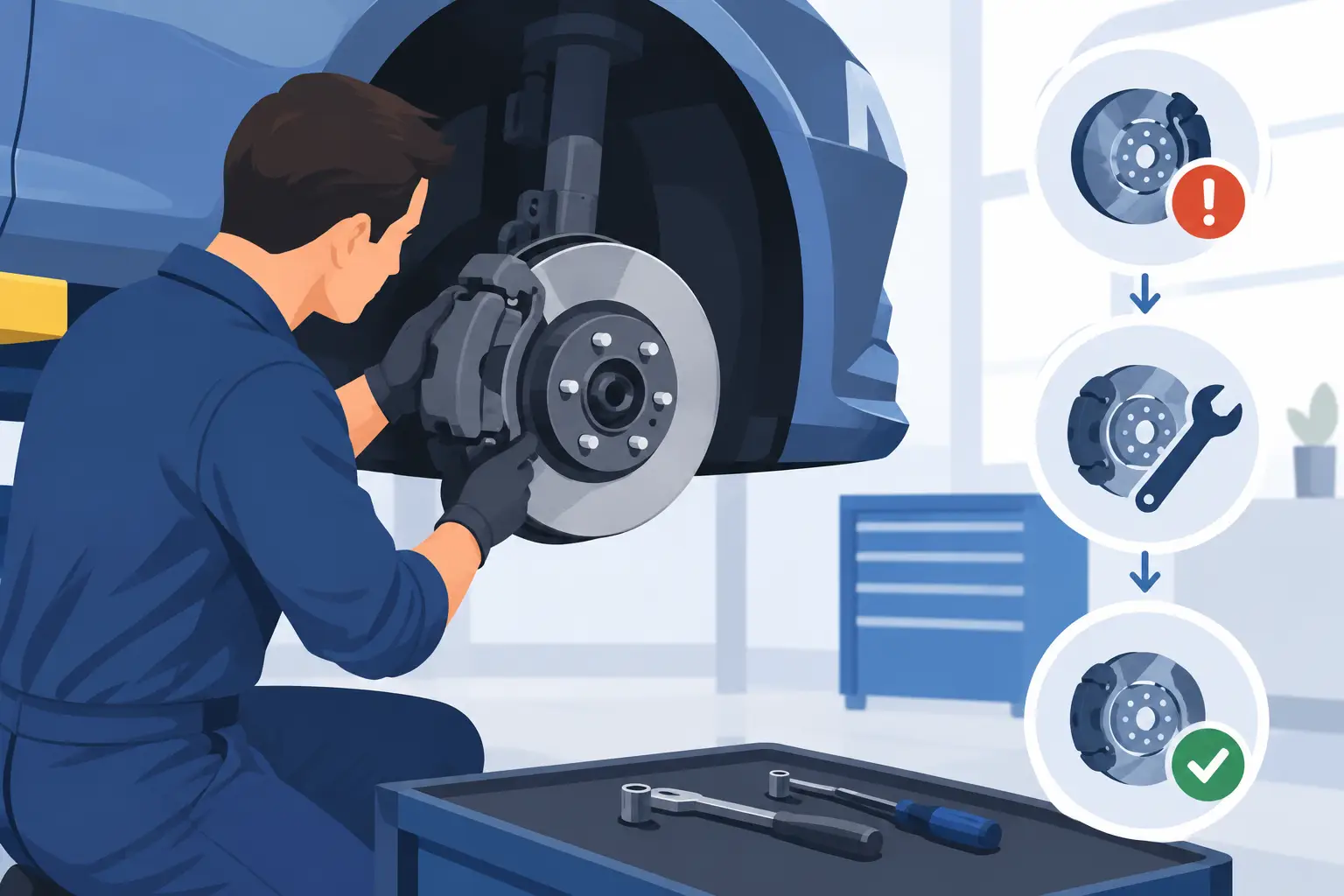
A soft brake pedal on the way home can turn an ordinary drive into a serious safety concern in seconds. This brake failure repair example follows a common real-world situation: a driver notices the pedal sinking lower than usual, hears a grinding sound, and finds the vehicle takes longer to stop. The right repair is not a guess or a quick parts swap. It starts with finding the exact cause and making sure the entire braking system is safe before the vehicle goes back on the road.
Brake problems can feel alarming because they are alarming. Whether you drive your family to school, commute through traffic, or depend on a work vehicle, reliable stopping power is not optional. A professional inspection gives you clear answers about what failed, what needs attention now, and what can reasonably wait.
The Brake Failure Repair Example: A Pedal That Sinks
A customer brings in a mid-size SUV after noticing that the brake pedal feels spongy. At a red light, the pedal moves closer to the floor than it used to, although the vehicle still stops. The driver also reports that the brake warning light came on briefly after a cold morning start.
This is not a condition to monitor for another week. A pedal that sinks, feels soft, or changes suddenly can point to low brake fluid, air in the hydraulic lines, a fluid leak, a failing master cylinder, worn brake components, or a combination of issues. The vehicle may still brake, but its stopping distance and braking balance may no longer be dependable.
The technician begins with a road-safe visual assessment rather than assuming the cause. Brake fluid level and condition are checked first. The vehicle is then raised so the mechanic can inspect brake lines, flexible hoses, calipers, pads, rotors, wheel cylinders where applicable, and connections around the master cylinder and brake booster.
In this example, the inspection finds wetness around one rear caliper and a noticeably low brake-fluid reservoir. The caliper seal has begun leaking, allowing fluid to escape. The rear brake pads have also become contaminated with brake fluid, while the rotor has developed uneven wear. Simply topping up the fluid would hide the issue for a short time, but it would not repair the leak or restore proper braking.
Finding the Cause Before Recommending Parts
Brake repairs should be based on evidence. A trustworthy shop explains what it found and why the recommended work is necessary. In this case, the failed rear caliper is the immediate safety problem. However, brake service often involves related parts because braking components work together.
The technician checks the other rear caliper for corrosion, sticking, and signs of leakage. If both rear calipers are in similar condition, replacing them as a pair may be the more reliable choice. If the opposite caliper is clean, operating correctly, and well within service limits, replacing only the failed unit may be reasonable. The right choice depends on the vehicle’s condition, mileage, parts availability, and the customer’s budget.
The pads cannot be safely reused once they are saturated with brake fluid. Brake fluid reduces friction material performance and can cause uneven braking. The rotor also needs close measurement. If it is above the manufacturer’s minimum thickness and its surface can be properly refinished, machining may be an option. If it is too thin, heavily scored, warped, or corroded, replacement is the safer long-term repair.
For this SUV, the recommended repair includes a replacement rear caliper, new rear brake pads, replacement rotors, fresh brake fluid, and a complete brake-system bleed. The technician also recommends inspecting the flexible brake hose feeding the caliper, since an old or damaged hose can contribute to brake problems and may need replacement if it shows cracking, swelling, or restricted flow.
What the Repair Process Looks Like
Once the customer approves the work, the repair begins by removing the wheel and damaged caliper. The brake hose is disconnected carefully to prevent contamination and unnecessary fluid loss. The old pads and rotors are removed, and the mounting hardware is inspected. Corroded or seized hardware can prevent pads from moving freely, leading to dragging brakes, uneven wear, heat damage, and poor fuel economy.
The replacement caliper is installed using the correct fittings and mounting torque. New rotors and pads are fitted with the appropriate hardware. The technician makes sure the pads sit correctly in the bracket and that the caliper slides move freely. These details matter. A new set of pads will not perform as intended if the hardware is binding or the caliper cannot move properly.
Next comes the hydraulic work. The brake system is filled with the correct brake fluid specified for the vehicle. The system is bled to remove trapped air, beginning in the proper sequence for that vehicle’s brake layout. Air in a brake line compresses under pedal pressure, which is why it can create a soft or spongy pedal.
After bleeding, the technician checks for leaks while the brake pedal is held under pressure. The pedal should feel firm and consistent. A scan tool may also be used when required, especially on vehicles with electronic brake systems or anti-lock brake system procedures that need to be activated during bleeding.
The Final Checks Are Part of the Repair
A brake failure repair is not complete when the new parts are bolted on. The vehicle needs a final inspection and controlled road test to confirm the pedal feel, straight-line braking, warning-light status, and overall operation.
During the test, the technician listens for abnormal noise and checks whether the vehicle pulls to one side under braking. The brakes are applied gradually at first to help bed in new pads and rotors. Proper bedding transfers a thin, even layer of pad material onto the rotor surface, helping the components work together smoothly.
The customer should also receive practical information before leaving. New pads and rotors may need a short break-in period. Avoiding repeated hard stops during the first several drives, when safe to do so, can help the new components settle in properly. If there is any burning smell, strong vibration, pulling, warning light, or change in pedal feel after service, the vehicle should be checked promptly.
Why Brake Failure Does Not Always Feel Like Total Failure
Many drivers expect brake failure to mean no brakes at all. Total hydraulic failure can happen, but more often the warning signs appear gradually. A lower pedal, squealing or grinding noise, vibration, pulling, fluid under the vehicle, or a brake warning light can all signal a developing problem.
Cold Canadian winters can add another layer of wear. Road salt encourages corrosion on brake lines, calipers, rotors, and hardware. Vehicles that sit for long periods may also develop seized components or surface corrosion. Regular maintenance inspections are often the best way to catch these concerns before they become an urgent repair.
If your brakes feel unsafe while driving, ease off the accelerator, leave extra space ahead, and apply steady pressure to the brake pedal. Do not pump the brakes repeatedly unless the pedal is sinking and you are trying to build pressure. Use the parking brake carefully and gradually only if necessary, as a sudden pull can cause loss of control. Pull over in a safe location and arrange professional assistance rather than continuing to drive.
Clear Advice Matters as Much as Quality Parts
No two brake repairs are identical. One vehicle may need pads and rotors because of normal wear. Another may require diagnosis of a hydraulic leak, damaged line, seized caliper, failing master cylinder, or an electronic brake system fault. The honest answer should reflect what the inspection shows, not a one-size-fits-all package.
At Niks Auto Repair, the goal is to give drivers a clear explanation of the problem, the recommended repair, and the reason behind it. You should know what work is urgent for safety, what affects reliability, and what the expected cost covers before repairs begin.
Brake concerns are easier to handle when you act early. If the pedal no longer feels right, the warning light appears, or stopping takes more effort than usual, have the vehicle inspected before the next routine trip turns into a roadside problem.