
.png)
Roadside Emergency Kit Guide for Canada
- niksautorepair99
- Jun 28
- 5 min read

A roadside breakdown rarely happens when it is convenient. It happens on a dark highway after work, in freezing wind on a rural road, or during a weekend trip when the trunk is already full. That is exactly why a roadside emergency kit guide matters. The right kit will not fix every problem, but it can keep you safer, more visible, and more comfortable until help arrives.
For most drivers in Canada, the best emergency kit is not the biggest one. It is the one you actually keep in your vehicle, know how to use, and update as the seasons change. A good kit supports three basic needs - visibility, communication, and short-term survival. Everything else should build from there.
What a roadside emergency kit should really do
There is a lot of advice online that turns a simple safety kit into a camping store. That usually leads to overpacking, wasted money, and forgotten gear buried under groceries and hockey bags. A practical roadside emergency kit guide should focus on real roadside situations: a flat tire, a dead battery, getting stuck in snow, waiting for a tow truck, or standing outside your vehicle in poor visibility.
Your kit should help you warn other drivers, handle a minor issue if it is safe to do so, and stay protected from weather if you cannot leave right away. It should also match how and where you drive. A downtown commuter has different needs than someone who drives northern highways, makes long intercity trips, or uses a pickup for work.
That is the trade-off most people miss. More gear can make sense, but only if it is relevant to your driving habits and you can store it properly.
Roadside emergency kit guide: what to pack first
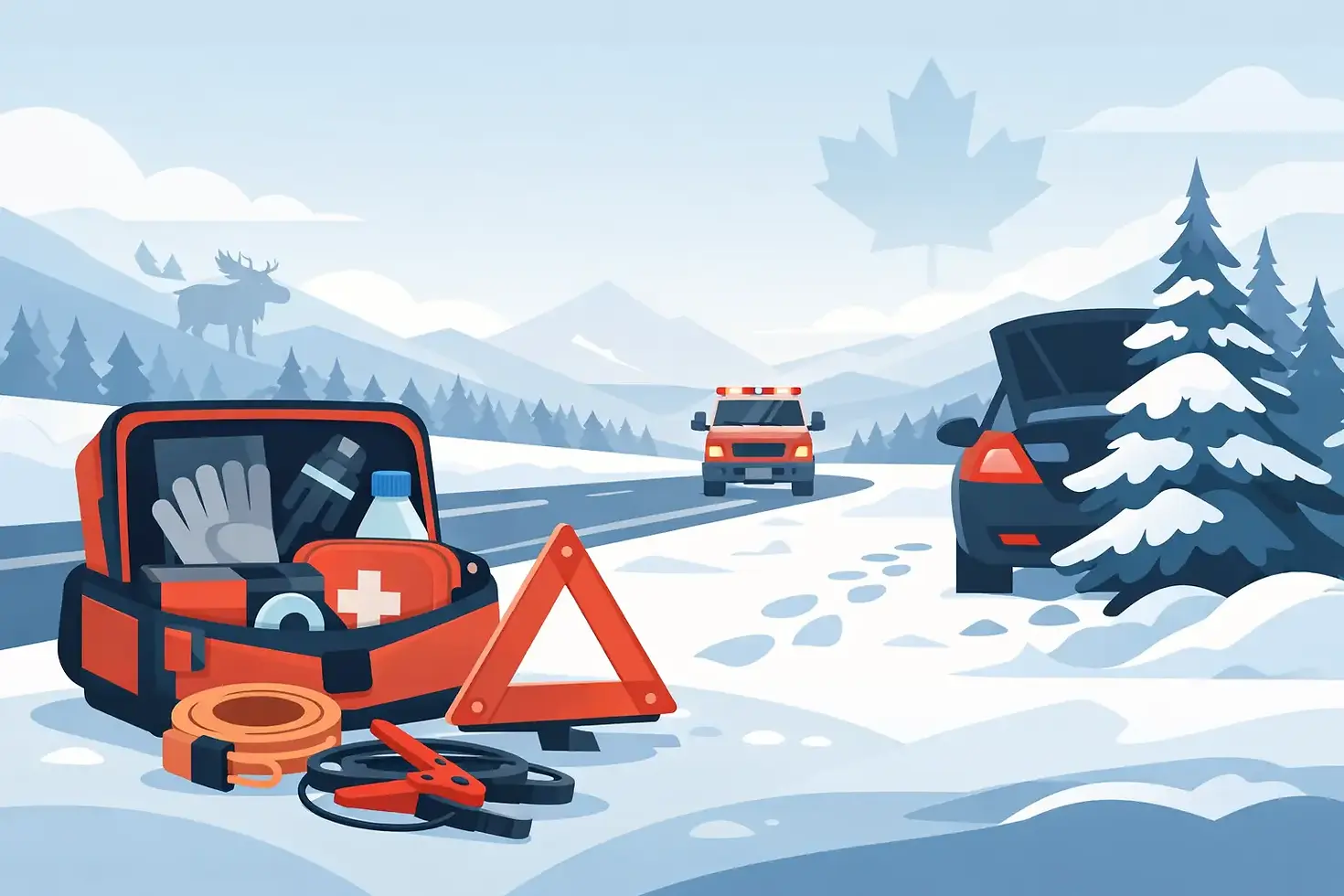
Start with the items that cover the most common problems. Every vehicle should have a flashlight with fresh batteries or a rechargeable model, a reflective safety vest, and warning triangles or road flares approved for roadside use. These are not glamorous purchases, but they do more for your safety than many tools people buy first.
A basic first aid kit also belongs in every car. It does not need to be oversized, but it should include bandages, gauze, antiseptic wipes, gloves, and any personal medications you may need in a delay. Add a phone charging cable and a power bank, because a dead phone turns a minor breakdown into a much bigger problem.
You should also keep a compact booster pack or jumper cables, but there is an important difference between the two. Jumper cables work only if another vehicle can safely assist. A charged booster pack gives you more independence and is often easier for everyday drivers to use. The downside is that it must be maintained and recharged on schedule.
A tire pressure gauge, a small air compressor, and a can of temporary tire sealant can be useful, though they depend on the type of damage. Sealant may help with a small puncture, but it will not solve a sidewall tear or major blowout. If your vehicle has a spare tire, make sure the jack and lug wrench are present and that you know where they are stored.
The items that matter most in a Canadian winter
Winter changes everything. Cold temperatures, snow, slush, and reduced daylight increase both the chance of a breakdown and the risk while waiting for assistance. If you drive in Canada, your cold-weather kit should go beyond the basics.
Pack a warm blanket or two, extra gloves, a toque, hand warmers, and a spare pair of socks. If your boots are not already in the vehicle, consider keeping insulated footwear in the trunk during winter months. Even a short wait outside the car feels much longer when you are underdressed.
A small snow shovel and a bag of sand, traction aid, or non-clumping kitty litter can help if your vehicle is stuck. An ice scraper and snow brush are obvious essentials, but many people still rely on a weak gas station scraper that snaps at the first hard frost. It is worth buying a durable one.
Food and water are also more important in winter, especially on longer drives. Keep a few non-perishable snacks in the car and rotate them before they expire. Bottled water can freeze, so storage takes a bit more planning. In severe cold, your goal is not comfort - it is staying functional until help arrives.
What many drivers forget to include
The most useful items are often the least talked about. A paper towel roll, work gloves, and a basic multi-tool can solve small roadside frustrations quickly. Wet wipes are helpful after checking fluids, changing a tire, or dealing with battery terminals.
It is also smart to carry copies of your insurance, registration details, and roadside assistance information in a waterproof pouch, even if you store most of it on your phone. If your battery dies or your phone is damaged, digital access becomes less reliable.
For families, add child-specific items that reflect real needs, not ideal ones. That could mean diapers, wipes, a spare layer, or a familiar snack. For business owners or fleet drivers, include a notepad, pen, and any job-specific contact information that may be needed if a breakdown affects deliveries or appointments.
What to skip or keep separate
Not every tool belongs in every vehicle. A full socket set, large fluid containers, and heavy recovery gear can clutter your cargo area without helping much in a normal breakdown. If you are not comfortable performing certain roadside repairs, there is no real advantage in carrying equipment you will not use properly.
Fuel should also be handled carefully. In some cases a small approved fuel container makes sense, but many drivers are better off avoiding this unless they understand safe storage requirements. The same goes for chemical products that can leak or degrade in extreme temperatures.
A roadside emergency kit guide should not push people toward false confidence. There is a difference between being prepared and taking risks on the shoulder of a busy road. If traffic is heavy, visibility is poor, or the vehicle is in a dangerous position, your first job is to get to safety and call for help.
How to store your kit so it actually helps
A well-stocked kit is only useful if you can reach it quickly. Keep the main items in a sturdy bin or soft case in the trunk, but place your flashlight, vest, and warning devices where they are easy to access without unloading the vehicle. If you have to empty sports gear and grocery bags onto the road to find your reflective triangle, the setup is not working.
Storage also depends on the season. Check batteries, recharge booster packs, replace expired first aid items, and swap in weather-specific supplies at least twice a year. Spring and late fall are good checkpoints for most Canadian drivers.
If more than one person uses the vehicle, make sure everyone knows what is in the kit and where it is kept. This is especially important for teen drivers, older family members, and employees using work vehicles.
A roadside emergency kit guide is only part of the plan
Even the best kit cannot replace basic vehicle maintenance. Many roadside calls start with preventable issues such as weak batteries, worn tires, low coolant, poor wiper blades, or brakes that were making noise for weeks. Your emergency kit helps after a problem happens. Maintenance reduces the chance of the problem in the first place.
That is why a practical approach works best. Keep your vehicle inspected, address warning signs early, and carry the supplies that support you if something still goes wrong. At Niks Auto Repair, that is how we look at roadside readiness - not as fear-based shopping, but as common-sense preparation backed by honest service.
If you are not sure where to start, begin small and build a kit you will actually maintain. A flashlight, reflective gear, first aid supplies, warm layers, and battery support cover a lot of ground. From there, adjust for your route, your season, and the people who ride with you. Peace of mind on the road usually comes from simple things done well.


Comments