
.png)
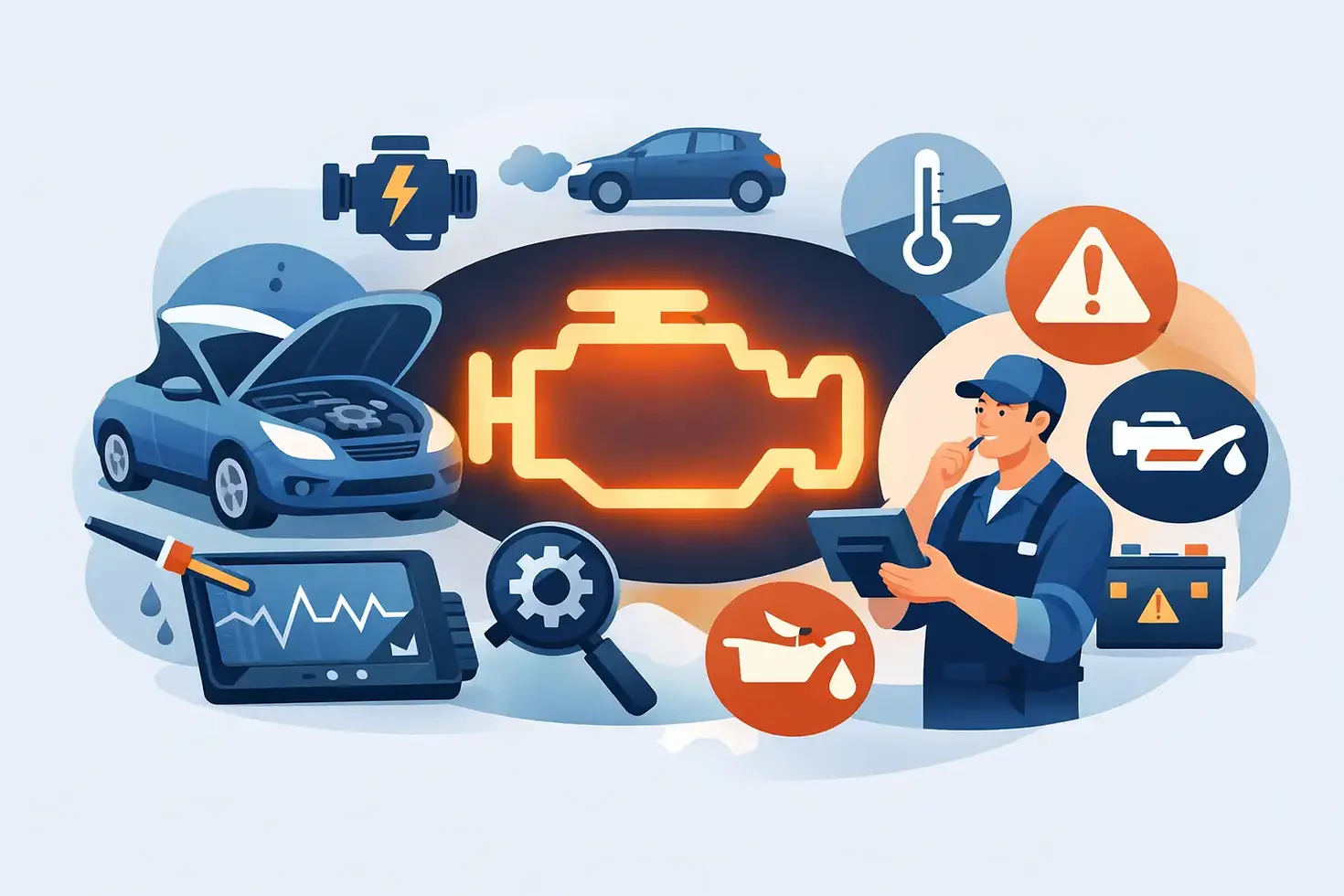
10 Common Check Engine Light Causes
- niksautorepair99
- Apr 13
- 6 min read

One of the most stressful moments for any driver is seeing that dashboard warning appear when everything seemed fine a minute ago. The good news is that many check engine light causes are manageable when caught early. The bad news is that ignoring the light can turn a small repair into a larger, more expensive problem.
For most drivers, the real frustration is not the warning itself. It is not knowing whether the issue is minor, whether the vehicle is still safe to drive, or whether a breakdown is around the corner. That is why clear diagnostics matter. A check engine light is your vehicle’s way of telling you something is off, but it does not tell you exactly what without proper testing.
What the check engine light is actually telling you
Your vehicle’s onboard computer monitors engine performance, emissions systems, fuel delivery, ignition timing, and other key functions. When it detects a reading outside the expected range, it stores a fault code and turns on the check engine light.
That does not always mean the engine itself is failing. In many cases, the issue involves a sensor, an emissions component, or a fuel system problem. Sometimes the fix is simple. Sometimes the code points to a deeper issue that needs further inspection. That is why guessing rarely saves money.
There is also an important difference between a steady light and a flashing one. A steady check engine light usually means the vehicle should be inspected soon. A flashing light is more urgent and often points to an active misfire that can damage the catalytic converter. If the light is flashing, reducing driving and arranging service quickly is the safer choice.
10 common check engine light causes
1. Loose or faulty gas cap
This is one of the most common and most overlooked issues. A gas cap that is loose, cracked, or not sealing properly can affect fuel system pressure and trigger an emissions-related fault.
If the light comes on shortly after refuelling, this is worth checking first. Tightening the cap may solve the issue, but the light may not reset immediately. If it stays on, the cap itself may be worn out or the system may have another leak.
2. Oxygen sensor failure
Oxygen sensors measure how much oxygen is in the exhaust and help the computer adjust the air-fuel mixture. When one fails, fuel economy can drop and emissions can increase.
A bad oxygen sensor may not make the vehicle feel dramatically different at first, which is why many people put it off. That delay can cause added strain on other components, especially if the mixture stays too rich or too lean for long.
3. Faulty mass air flow sensor
The mass air flow sensor tracks how much air enters the engine so the computer can deliver the correct amount of fuel. If the sensor sends inaccurate readings, the engine may run rough, hesitate, or consume more fuel than normal.
In Canadian driving conditions, dirt, moisture, and temperature swings can all affect sensors over time. Sometimes cleaning helps. In other cases, replacement is the right repair.
4. Ignition coil or spark plug problems
Worn spark plugs and failing ignition coils are a frequent cause of misfires. You may notice shaking at idle, sluggish acceleration, hard starts, or poor fuel economy.
This is not a repair to delay for too long. A continued misfire can damage the catalytic converter, and that repair is far more expensive than replacing plugs or coils when the problem starts.
5. Catalytic converter issues
The catalytic converter helps reduce harmful emissions. When it begins to fail, the check engine light may come on along with reduced power, poor acceleration, or a rotten egg smell from the exhaust.
Sometimes the converter itself is the problem. In other cases, the converter is damaged because another issue was ignored first, such as a misfire or fuel mixture problem. That is where proper diagnosis matters. Replacing the converter without fixing the root cause can lead to repeat failure.
6. EVAP system leaks
The evaporative emissions system, often called the EVAP system, captures fuel vapours and prevents them from escaping into the atmosphere. Small leaks in hoses, valves, or seals can trigger the check engine light.
These faults usually do not create major drivability issues, which makes them easy to ignore. Still, they should be checked. An EVAP problem can make it harder to pass emissions-related inspections and may point to deteriorating components that will only worsen over time.
7. Vacuum leaks
Modern engines rely on carefully controlled airflow. A vacuum leak allows unmetered air into the system, which can upset the air-fuel ratio and trigger fault codes.
This can show up as rough idling, surging, stalling, or hesitation. Vacuum leaks range from simple cracked hoses to intake gasket issues, so the repair depends on where the leak is and how severe it has become.
8. Thermostat or coolant temperature sensor problems
Your engine needs to operate within a specific temperature range. If the thermostat sticks or the coolant temperature sensor gives false readings, the computer may detect abnormal operation and switch on the warning light.
You might also notice poor heater performance, higher fuel consumption, or temperature gauge irregularities. In colder Canadian weather, these issues can become more noticeable, especially during winter starts and shorter trips.
9. Fuel injector or fuel system faults
Fuel injectors deliver fuel into the engine in precise amounts. If one becomes clogged, leaks, or stops operating properly, the engine may run unevenly and trigger the light.
Other fuel system problems, such as weak fuel pressure or a failing pump, can create similar symptoms. The challenge is that several different faults can feel the same from the driver’s seat. That is why scan data and hands-on testing are both important.
10. Battery, charging, or electrical issues
Not every check engine light is caused by a traditional engine problem. Low system voltage, poor connections, or charging system issues can interfere with sensor readings and module communication.
This is one of those situations where the fault code may not tell the whole story right away. If your vehicle has had hard starts, dim lights, or recent battery trouble, electrical testing should be part of the diagnosis.
Check engine light causes that should not wait
Some problems let you schedule service in the next day or two. Others need attention as soon as possible. If the light is flashing, if the engine is shaking badly, if there is a strong fuel smell, or if the vehicle has lost significant power, it is best not to keep driving as normal.
The same goes for overheating, stalling, or loud changes in engine noise. These symptoms suggest the issue may be affecting safe operation or could cause further damage. In those cases, a quick diagnostic appointment is cheaper than gambling on a breakdown.
Why code reading is only the first step
A lot of drivers have access to a basic scan tool or can get a code read at a parts counter. That can be helpful, but a code is not a full diagnosis. It tells you what system is affected, not always what part has failed or why.
For example, a lean condition code does not automatically mean a sensor is bad. It could be a vacuum leak, low fuel pressure, a dirty sensor, or something else entirely. Replacing parts based on guesswork is one of the fastest ways to spend money without solving the problem.
A proper diagnostic process includes reading stored codes, checking live data, inspecting related components, and confirming the repair before clearing the fault. That approach saves time, prevents repeat visits, and gives you a clearer picture of what your vehicle actually needs.
How to respond when the light comes on
Start by paying attention to how the vehicle is running. If the light is steady and the car feels normal, check the gas cap and book an inspection soon. If the light is flashing or the vehicle is running poorly, treat it as urgent.
Try to remember what changed around the time the light appeared. Did it happen after refuelling, during cold weather, on a long highway drive, or after the engine started idling rough? Small details can help narrow things down faster.
It is also worth avoiding the temptation to disconnect the battery just to turn the light off. That does not fix the problem, and it can erase helpful information needed to diagnose the issue properly.
The value of early diagnostics
Most check engine light causes are easier and less expensive to deal with when handled early. A sensor issue caught quickly may stay a simple repair. Left alone, the same issue can affect fuel economy, emissions components, drivability, and long-term engine health.
At Niks Auto Repair, the focus is on giving drivers clear answers, honest recommendations, and repairs that make sense for the vehicle and the budget. That matters when a warning light leaves you wondering whether the issue is minor or more serious.
When your check engine light comes on, the smartest move is not to panic and not to ignore it. Get it checked, get a clear explanation, and give yourself the confidence of knowing exactly what your vehicle needs.



Comments